The Aesthetic
Seasonal Wagashi: The Sweets That Mark the Tea Year
The tea sweet is keyed to the tea and the season: dry sweets with thin tea, fresh with thick, eaten before you drink — plus a named form for each season.
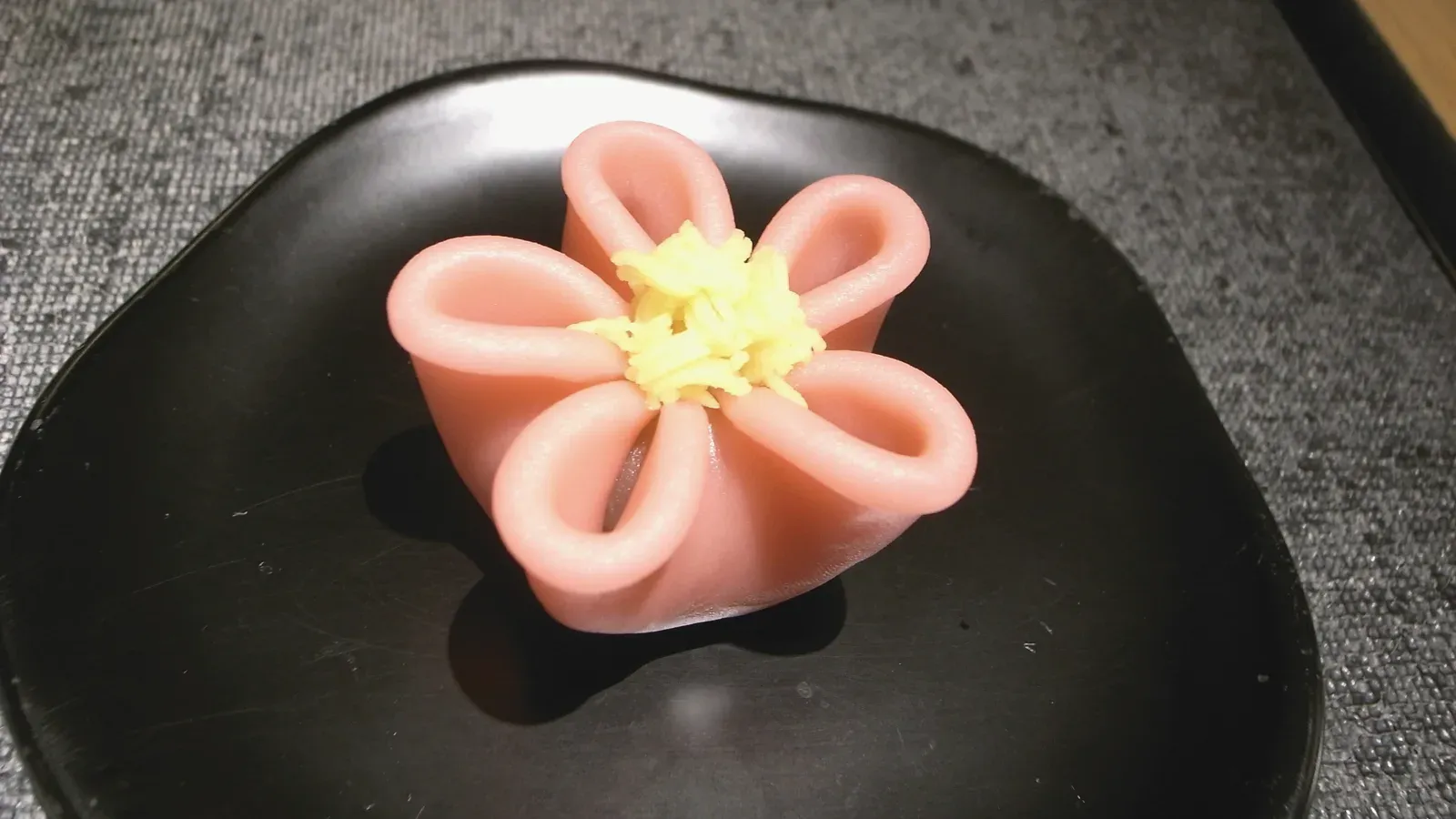
The tea sweet is a working part of the gathering, keyed to the tea: the dry sweet with thin tea, the fresh sweet with thick, eaten before you drink so the sugar meets the tea first. Its shape carries the season.
A guest at a formal gathering eats the sweet first and drinks the tea second. This looks backward to anyone raised on dessert, and it is the first sign that the wagashi (和菓子, Japanese confection) has a job to do here. What the job is depends on which tea is coming.
Two sweets, two teas
Chanoyu serves tea in two strengths, and each has its own class of sweet.1 The rule is old and practical, and it comes as a pair.
Usucha (薄茶), thin tea, is whisked light and frothy from about two scoops of matcha. It takes a higashi (干菓子), a dry, low-moisture sweet — the confectioners also call it sōgashi. The classic higashi is pressed wasanbon (和三盆), a fine-grained traditional sugar that dissolves on the tongue almost before you have chewed it, molded into a leaf, a plum blossom, or a coin-sized disc of rice flour and sugar. A higashi keeps for days and travels well. You take it from a flat tray, one or two pieces, and eat it before the host brings the bowl.
Koicha (濃茶), thick tea, is a different drink: three or four scoops kneaded with a little hot water into something closer to warm paint than to a beverage, dark green and intensely bitter. It is the ceremonial center of a full gathering. Koicha takes an omogashi (主菓子), the “main sweet” — a fresh, moist confection, called a namagashi (生菓子) in the confectioner’s general vocabulary and an omogashi once it takes this formal role. Most often it is a nerikiri (練り切り): sweet white-bean paste worked by hand into a seasonal shape and colored to match. A nerikiri is made the day it is served and stales within hours, which is why it appears only at the formal gathering, while the keeping-quality higashi is the one that travels. The contrast between the two sweets is deliberate: one dry, geometric, and durable; the other soft, representational, and gone by evening, the same split as the two teas they accompany.
| Sweet | Form | Tea it accompanies | When |
|---|---|---|---|
| Higashi / sōgashi (干菓子) | Dry, pressed sugar or rice flour | Usucha (thin tea) | Taken before the thin tea |
| Omogashi / namagashi (主菓子・生菓子) | Fresh, moist, molded bean paste | Koicha (thick tea) | Taken before the thick tea |
Why the sugar goes first
The order is the technical part. Koicha is bitter and astringent in a way most first-time drinkers find startling, and the sweet is eaten first so its sugar is still on the tongue when the tea arrives.2 Tradition adds that it lines the stomach ahead of a strong, caffeine-heavy drink taken on an empty one. Treat that stomach-lining part as the tradition’s own explanation, unproven as physiology; the taste effect you can check in a single bowl. Sugar first, then koicha, and the bitterness reads as depth.
The pairing, in other words, is a real technique, not etiquette theater. The sweet is placed where it is because it changes how the tea tastes, and to serve it afterward would make a worse gathering, whatever the etiquette books allowed.
The season is built in
Wagashi and the tea ceremony matured together over the Edo period. The confection reached its refinement in the later seventeenth century — Toraya’s illustrated book of sweets, the Okashi no ezu, was compiled in 1695, in what one account calls the period of wagashi’s perfection.3 By then a sweet was expected to carry its season in both its design and its ingredients, the same instinct the tea room applies to the flower and the scroll.4
The name is the part outsiders miss. A single molded sweet might be a pale green dome scored with a few lines, and on its own it is a pleasant abstraction. Give it a poetic name, “young leaves” or “first frost” or “the sound of the valley,” and it becomes a small seasonal image, and the guest is expected to catch the reference the way one catches the season-word in a haiku. The confection and the scroll and the flower in the alcove all point at the same month.
Here is a year in named sweets, one anchor per season. Treat the exact windows as conventional rather than fixed:
- New Year — hanabiramochi (花びら餅). A semicircular white mochi folded over sweet bean paste and a strip of sweetened burdock root, the pink of the filling showing faintly through the skin. It is served at the hatsugama (初釜), the first tea gathering of the year, and its modern form settled in the Meiji era.5 It descends from a Heian court New Year sweet tied to the ha-gatame (歯固め), the “tooth-hardening” rite eaten for long life.6
- Spring — sakura mochi (桜餅). Pink rice cake around bean paste, wrapped in a salted, pickled cherry leaf. The leaf is eaten with it, and its salt cuts the sweetness the way the koicha’s bitterness does.
- Summer — mizu yōkan (水羊羹). A softer, chilled azuki-bean jelly, looser and wetter than the firm block eaten in winter. It is made to look cool, which in a Kyoto July counts for as much as the flavor.
- Autumn — kuri kinton (栗きんとん). Sweetened mashed chestnut, sometimes molded to a raw chestnut’s shape, the color of the season it names.
Choosing the day’s sweet
The host picks the sweet the way the flower and the scroll are picked: to name the month without stating it. A gathering in late March might set out a nerikiri shaped as a half-open cherry bud, pale pink shading to white; the same host in November reaches for a russet maple leaf or a chestnut. A cherry sweet is served in the short window before the blossoms open, so that the confection runs a week or two ahead of the tree, and the guest tastes the season as it arrives, a step in front of the branch. Timing matters more than realism here. This is the same calendar the tea room keeps in everything else it sets out, the saijiki sense of the year, worked in sugar and bean paste.
A well-chosen sweet also answers the scroll in the alcove. If the hanging line reads “the valley stream,” the sweet might be a clear jelly with a single leaf suspended in it. The guest is meant to see the rhyme, which is why the sweet is looked at before it is eaten.
Eating one at a gathering
For a guest, the sequence is short and fixed. The sweets come out before the tea. Look at yours before you eat it; it was made to be looked at. Then take the dry sweet from the tray with your fingers, and take the fresh sweet with the small pick provided, cutting it into two or three bites. Finish it before the host sets down your bowl, so that when the tea arrives, your only task is the tea.
The practice asks little of the guest: eat the sugar before the bitter tea, in a shape and under a name that fit the month. Once you have tasted koicha both ways, you keep to the order because it works. The pairing belongs to the same seasonal instinct that runs through the whole aesthetic of the tea room, and it plays out month by month in a seasonal tea practice at home. The two teas it serves, thin and thick, each have their own story: see usucha vs. koicha.
Sources
6sourcesOmotesenke Fushin'an (official English site), 'Sweets'
SupportsTea sweets divide into omogashi (moist 'main sweets', also called namagashi) and higashi (dry sweets, also called sōgashi); at a formal event omogashi are eaten with thick tea and higashi with thin tea
My Japanese Green Tea, 'Wagashi'
SupportsGuests eat the sweet before the bowl of matcha, so its sweetness is still in the mouth as the tea is tasted
Japan Economic Foundation, Japan Spotlight (journal)
SupportsToraya's illustrated sweet-book 'Okashi no ezu' compiled in 1695, in what the article calls the period of the perfection of wagashi — late-17th-century refinement
Nippon.com, 'Toraya: A Sweet, Centuries-Old Success Story'
SupportsA wagashi is connected to its time of year in both its design and its ingredients
Wikipedia, 'Hanabiramochi'
SupportsServed at the first tea gathering of the new year (hatsugama); semicircular white mochi folded over anko with a central strip of sweet burdock; modern form first made in the Meiji era
Foreign Press Center Japan
SupportsHanabiramochi descends from a Heian New Year court sweet linked to the ha-gatame ('tooth-hardening') rite eaten for long life
Image: akira yamada from Yokohama, Japan, Wikimedia Commons · CC BY-SA 2.0