The Way
The Seven Rules of Rikyū
Rikyū's seven rules of tea read like a caterer's checklist — make good tea, lay the charcoal, arrange flowers as in the field. Doing them is the hard part.
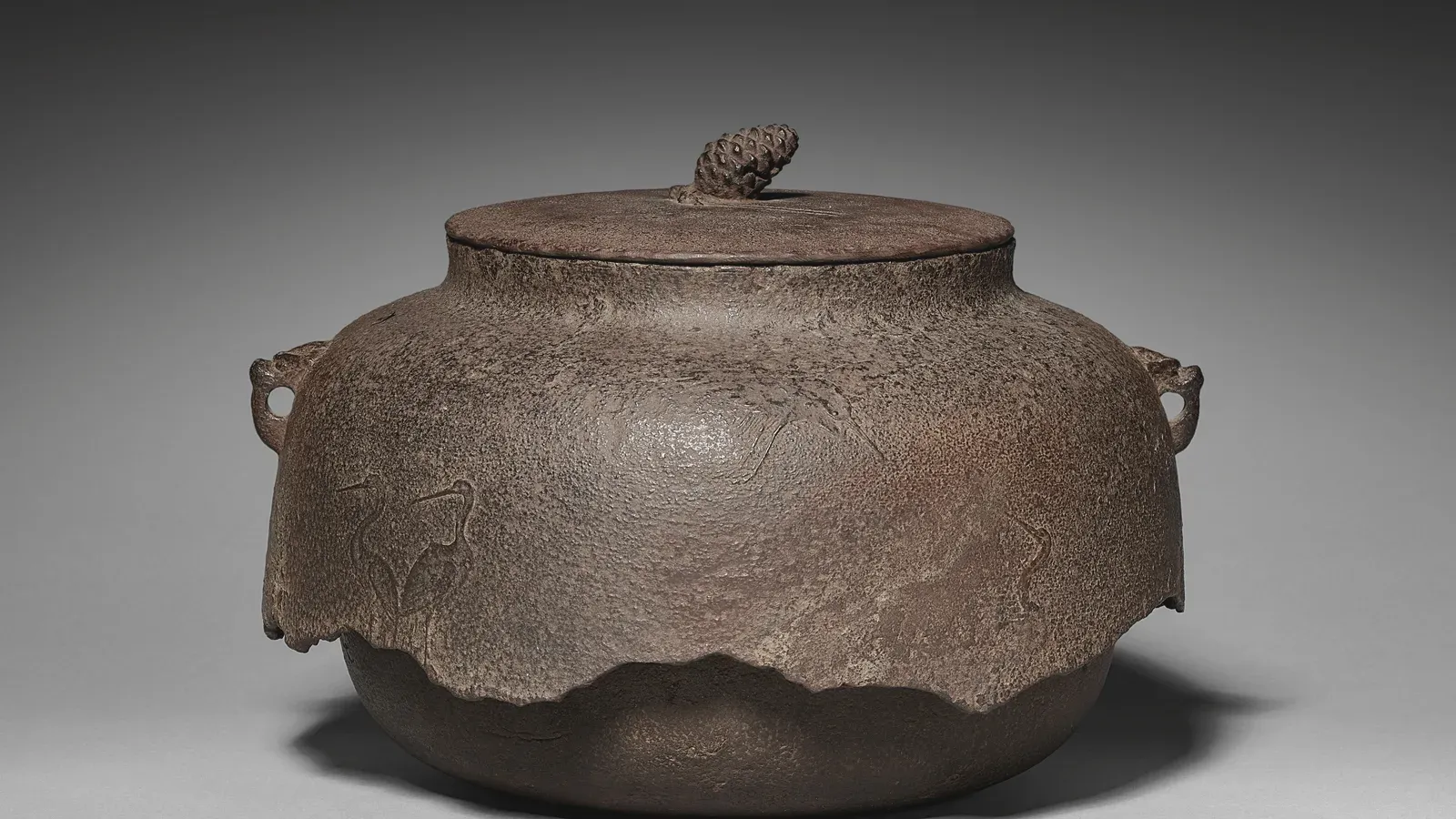
The Rikyū Shichisoku, the seven rules of tea, are almost insultingly ordinary: make a good bowl of tea, lay the charcoal well, keep the room comfortable, arrange the flowers naturally, be early, be ready for rain, care for your guests. A pupil once said he knew them all already; Rikyū answered that if the pupil could carry all seven out, he would become the pupil’s student. The banality is the lesson.
Anyone who comes to the seven rules of Rikyū expecting a secret meets a plain list instead, and the plainness is where the teaching starts. There is no hidden koan here, no cryptic instruction that unlocks the tea room — just a list a competent host would call obvious. That is the design.
The seven rules
The rules are known in Japanese as the Rikyū Shichisoku (利休七則), “Rikyū’s seven rules.” Here they are in the wording the Urasenke school uses in English.1
- Make a satisfying bowl of tea.
- Lay the charcoal so that the water boils efficiently.
- Provide a sense of coolness in the summer and warmth in the winter.
- Arrange the flowers as though they were in the field.
- Be ready ahead of time.
- Be prepared in case it should rain.
- Act with utmost consideration toward your guests.
Read them once and they sound like a checklist any caterer could write. Read them a second time, against the question of whether you could do all seven, every time, and they stop being obvious.
| Rule | What it asks of the host |
|---|---|
| Make a satisfying bowl of tea | Tea that tastes right, at the right temperature and strength, for the person in front of you — the entire aim in one line |
| Lay the charcoal well | The fire is a craft; the kettle must come to the boil at the right moment, by arrangement rather than luck |
| Coolness in summer, warmth in winter | Read the season and the guest’s body, and manage real comfort — the sunken hearth in winter, a sense of water and shade in summer |
| Flowers as in the field | Chabana: one or two stems, placed as they grow, with none of the display of formal arrangement |
| Be ready ahead of time | Finish early and keep a margin, so a guest never waits on your scramble |
| Be prepared for rain | Anticipate what could go wrong and carry the umbrella you may not need |
| Utmost consideration for guests | The aim the other six serve |
The pupil who already knew
The rules travel with a story. A pupil, hearing them, said that this was nothing new — he knew all of it already. Rikyū’s reply turns the whole thing over: if you can carry out these seven rules without fail, he said, then I will become your pupil.
The exchange comes down through the tea literature, not from a document in Rikyū’s hand — it is transmitted through the Nanpōroku, a record of his teaching that surfaced only about a century after his death — so treat it as a story the tradition kept alive.3 As tradition, it is exact. The pupil made the error everyone makes with the seven rules, which is to confuse understanding them with being able to do them. Knowing that tea should be the right temperature is trivial. Producing the right temperature, in this bowl, for this guest, in this weather, every single time, is a discipline of years. Rikyū’s answer moves the whole matter from knowledge to execution, and on the ground of execution he was willing to bet that no one in the room, himself aside, could meet the list.
Why “obvious” is the trap
Here is the staked reading. The seven rules are banal on purpose, because the hard part of tea is doing an ordinary thing consistently and well, and no list can shortcut that. A host of thirty years is still working on rule one: the charcoal burns a shade too fast, the flowers come out a touch too arranged. The list reads like a floor and works like a ceiling. What looks like a refusal to be profound is the whole of Rikyū’s method — the plain task, done with complete attention, and nothing decorative laid on top.
A list of judgments disguised as tasks
Look closely and each rule hides a decision no procedure can make for you. Rule three asks for coolness in summer and warmth in winter, but how much, and by what means, depends on the day, the guest, and the room. In the cold months the host lays a sunken hearth, the ro, close to the guests; in summer the fire retreats to a portable brazier, the furo, and the room is arranged to suggest water and shade. The rule names the goal; reading the particular morning to meet it is the skill, and no two mornings are alike. The brazier and the hearth are the seasonal machinery behind that one line.
Rule four is the same problem in flowers. “As though they were in the field” rules out the formal, showy arrangement, then asks the host to judge, stem by stem, what looks unforced in this alcove on this day. The right answer changes every time, which is why it cannot be reduced to a method. The seven rules are a list of judgments disguised as a list of tasks, and that is why a student is graded on them for years. A teacher can watch a bowl of tea and read, in its temperature and froth and the timing of its arrival, whether rule one was met. Most days, not quite.
Where the seven rules sit
The seven rules are one half of a pair. Tea teaching frames them alongside the four principles, wa-kei-sei-jaku — harmony, respect, purity, tranquility — as the shiki shichisoku (四規七則), the “four principles and seven rules.”1 The four name the spirit of the gathering; the seven name the conduct. One tells you what a tea gathering is for, the other tells you what to do with your hands and your morning.
Like most of what carries Rikyū’s name, the wording reached us through the schools rather than from his own brush. It was transmitted, refined, and set in its familiar form by the tea lineage that traced back to him — through his grandson Sen Sōtan (千宗旦, 1578–1658) and the three Sen schools that Sōtan’s sons founded.2 Take the seven rules, then, as the tradition’s distilled statement of Rikyū’s practice: faithful to him, and shaped by the hands that carried it.
The place to test all this is a real gathering. The seven rules are written for a host, and they only become legible when you try to keep them — start with how to host a simple tea gathering, and watch how fast rule five, “be ready ahead of time,” turns from platitude into the hardest instruction on the list. The whole of chadō is in that gap between reading the rule and keeping it.
Sources
3sourcesUrasenke Konnichian (official English site), 'An Introduction to Chadō'
SupportsSchool-source English wording of the seven rules (Rikyū shichisoku) and the four principles wa-kei-sei-jaku; the shiki shichisoku frame of four principles plus seven rules
Wikipedia, 'Sen no Sōtan'
SupportsSen Sōtan (1578–1658), grandson of Sen no Rikyū; three of his sons founded the three Sen schools — Kōshin Sōsa (Omotesenke), Sensō Sōshitsu (Urasenke), Ichiō Sōshu (Mushakōjisenke)
Wikipedia, 'Southern Record' (Nanpōroku)
SupportsThe Nanpōroku, a record of Rikyū's teaching attributed to his disciple Nanbō Sōkei, surfacing about a century after Rikyū's death; the tea literature through which the seven-rules anecdote and much circulating 'Rikyū said' material are transmitted; its authenticity is contested