The Way
Eisai and the Arrival of Tea in Japan
Tea reached Japan twice. The first time, in the ninth century, it faded. The monk Eisai brought it back in 1191, bound to Zen — and that time it held.
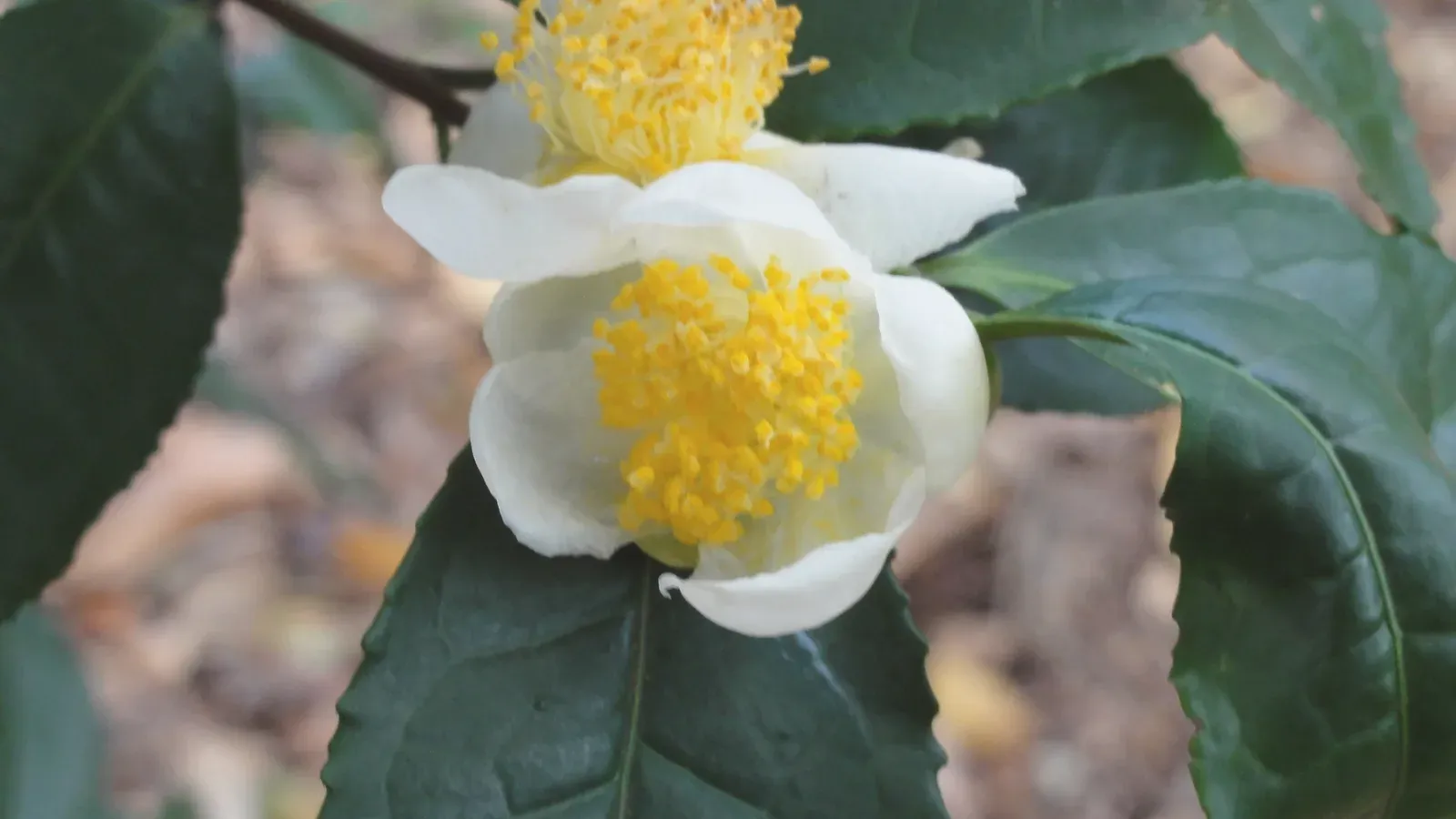
Tea reached Japan twice. Monks from Tang China carried seeds home in the early 800s, and after a brief vogue at court the interest faded. The Zen monk Eisai brought tea back from Song China in 1191, tied to a monastic discipline, and wrote Japan’s first tea book, the Kissa Yōjōki. That second arrival is the one that held.
Every whisked bowl of matcha in a tea room today runs back along a single thread to a monk’s second voyage to China. The thread is older than that, and this is the part most accounts skip: tea had already come to Japan once, three centuries earlier, and had all but died out. What matters about how tea “arrived” is why it failed the first time and held the second.
The first arrival, and its long silence
In the year 804 two monks sailed with a Japanese embassy to Tang China: Saichō (最澄) and Kūkai (空海), who would go on to found the Tendai and Shingon schools of Buddhism. They are traditionally credited with bringing the first tea seeds back to Japan, though the documentary evidence for exactly who carried what is thin.1 What is firmer is a scene a decade later. In 815, during an imperial tour, the monk Eichū (永忠) brewed and served tea to Emperor Saga (嵯峨天皇). The moment is recorded in the Nihon Kōki (日本後紀), one of the official court histories, and it is the earliest reliable account of anyone drinking tea in Japan. Saga was taken enough with it to order tea planted across five provinces of the Kinai region around the capital.3
Then almost nothing, for three hundred years. Court tea in the early Heian period was a Chinese affectation, brewed from brick tea in the Tang manner, and it lived and died with the fashion for all things Tang.1 When official contact with China wound down late in the ninth century, the tea plantations went with it. Tea failed to take root as a habit, a medicine, or a practice. It arrived, impressed a few aristocrats, and was set down again.
Eisai
The man who brought it back was born in 1141 in Bitchū Province, in what is now Okayama. His name is written 栄西 and read two ways: Eisai is the conventional English form, while Yōsai is increasingly preferred in scholarship. Both are legitimate, and there is no need to declare a winner.2 He was ordained young in the Tendai school, the establishment Buddhism of his day, and grew restless with it.
Eisai made two journeys to China. The first, in 1168, lasted only about six months. The second mattered more: he returned to Song China in 1187, stayed for years, trained in Chan (Zen) Buddhism, and came home in 1191 carrying Zen scriptures and green-tea seeds.2 He is remembered as the founder of the Rinzai (臨済) line of Zen in Japan, the school of the sudden question and the seated koan, and Britannica names him plainly as the priest who introduced both Rinzai Zen and the tea plant.4 What he brought back was a single practice in which tea and Zen were already bound together, and that binding is why the second arrival did what the first could not.
On his return he planted seeds in the garden of the Ishigamibo on Seburiyama (背振山, Mt. Sefuri), on the border of present-day Fukuoka and Saga in Kyushu.2 Tea re-entered Japan through a temple and a working discipline — through men who drank it to stay awake through long sittings, in a mountain hall far from any palace.
| Year | Event |
|---|---|
| 804 | Saichō and Kūkai sail to Tang China; traditionally credited with the first tea seeds |
| 815 | Eichū serves tea to Emperor Saga; earliest reliable record, in the Nihon Kōki |
| 9th–12th c. | Court interest lapses; the early plantations disappear |
| 1191 | Eisai returns from Song China with Zen and tea seeds |
| 1211 | Kissa Yōjōki, Japan’s first tea treatise |
The Kissa Yōjōki
In 1211 Eisai finished the Kissa Yōjōki (喫茶養生記), “Drink Tea and Prolong Life,” the first treatise on tea written in Japan. A second version followed in 1214, which is the source of the occasional date confusion; treat 1211 as the first edition and 1214 as a revision.1 The book runs to two volumes. The first sets tea against the five vital organs of Chinese medicine, arguing that the heart, which “loves bitter things,” is nourished by tea’s bitterness. The second turns practical: how the plant grows, and how the leaf is picked and processed.2
The book opens on a famous line in praise of tea as the supreme medicine for sustaining life. It is quoted everywhere, and almost always differently, because there is no settled English translation — versions run from “tea is the elixir of life” to longer renderings about nourishing health and prolonging one’s years. Read each as one translator’s version of a line that has no fixed English form. The medical claims, too, are thirteenth-century Chinese-medicine framing; read them as period history.
Eisai wrote the book for a specific patient. Tradition has it that he presented the 1214 version to the young shogun Minamoto no Sanetomo, who was unwell — by some tellings, hungover — and that tea was the prescription.1 Whatever the truth of the anecdote, the shape of it is right: tea entered the warrior capital of Kamakura as medicine backed by a monk’s authority, and that is a sturdier footing than fashion.
Why the second time held
The first arrival failed because court tea was decoration — a Tang import with nothing to do once the vogue passed. The second held because Eisai handed tea a job. In a Zen monastery, tea had daily work: it kept monks awake through hours of seated meditation, and it punctuated the routine of the hall. A practice with a use spreads on its use, and Zen was spreading. Rinzai took hold among the Kamakura warrior class over the thirteenth century, and tea rode with it, temple to temple, patron to patron, carried on the back of a growing institution.
Eisai also gave the habit a text. The Kissa Yōjōki argued, on the authority of a respected monk and the whole apparatus of Chinese medicine, that drinking tea was good for you. Court fashion had offered no such reason to keep drinking once the novelty wore thin. Doctrine, daily use, and an expanding school: three things the ninth-century tea lacked, and the reason the twelfth-century tea outlived its founder by eight hundred years.
The matcha he didn’t bring
Eisai brought seeds and a method, not matcha as a modern drinker means the word. The tea of Song China that he knew was made by grinding compressed tea and whisking the powder in hot water — the ancestor of the practice, and the reason chanoyu whisks rather than steeps. Matcha as it is now understood, ground from specially grown leaf, was refined in Japan across the four centuries after him.1 To say Eisai “brought matcha” folds all of that development into a single boat.
The correction matters because the inflated version travels so well. His real contribution was subtler and larger: he re-introduced tea as part of a discipline, and wrote down why it belonged there.
The chain to Uji
Eisai gave some of his seeds to another monk, Myōe (明恵), the abbot of Kōzan-ji (高山寺) in the hills northwest of Kyoto. Myōe planted them at Toganoo (栂尾), and the tea grown there became known as honcha, the “real tea,” the standard against which other tea was judged. From Toganoo the cultivation spread south to the valley of Uji (宇治), which grew into the first large-scale tea-growing district in Japan and, in time, surpassed Toganoo entirely.1 That is a story in its own right — how one valley south of Kyoto set the standard for Japanese tea and holds it still, told in Japan’s tea regions.
Everything downstream of Eisai runs through that valley: the shaded gardens that would make tencha and gyokuro, the tea that supplied the great gatherings, the leaf a Kyoto shop sells this morning. The seeds a Zen monk carried off a ship in 1191 became an industry, and the whisked bowl became the center of a discipline that is the subject of this whole pillar, the Way of tea. Rikyū and the schools that measure themselves against him are still four centuries downstream of this moment — but they begin here, with a monk who drank bitter tea to stay awake, and wrote the first Japanese book to say why.
Sources
4sourcesWikipedia, 'History of tea in Japan'
SupportsSaichō and Kūkai travel to Tang China in 804, thought to bring back the first tea seeds (documentary evidence uncertain); ~three centuries of declining interest after Emperor Saga; Kissa Yōjōki first edition 1211, a second version presented 1214; Eisai gave seeds to Myōe, abbot of Kōzan-ji, who planted them at Toganoo then Uji, the first large-scale cultivation; matcha's leaf-grinding method later emerged in Japan
Wikipedia, 'Eisai'
SupportsMyōan Eisai or Yōsai (明菴栄西), 27 May 1141 – 1 August 1215; ordained in the Tendai school; founder of the Rinzai line of Zen in Japan; two journeys to China (1168; a longer stay from 1187); returned 1191 with Zen scriptures and green-tea seeds, first planted at the Ishigamibo garden on Seburiyama (Mt. Sefuri); author of the Kissa Yōjōki, whose two volumes cover tea and the five organs of Chinese medicine (the heart 'loves bitter things') and the cultivation and processing of the leaf
Ministry of Agriculture, Forestry and Fisheries (MAFF), Japan
SupportsJapan's oldest record of tea drinking is in the Nihon Kōki: in 815 the monk Eichū served tea to Emperor Saga during an imperial tour, after which Saga ordered tea planted across five provinces of the Kinai region
Encyclopædia Britannica, 'Eisai'
SupportsInstitutional biography: Eisai (1141–1215), priest who introduced the Rinzai school of Zen and the tea plant to Japan