The Practice
How to Make a Hōjicha Latte (Powder and Brewed)
Hōjicha powder and brewed leaf make two different lattes. The ratios for each, why powder wants cooler water than leaf, and how to stop it tasting milky.
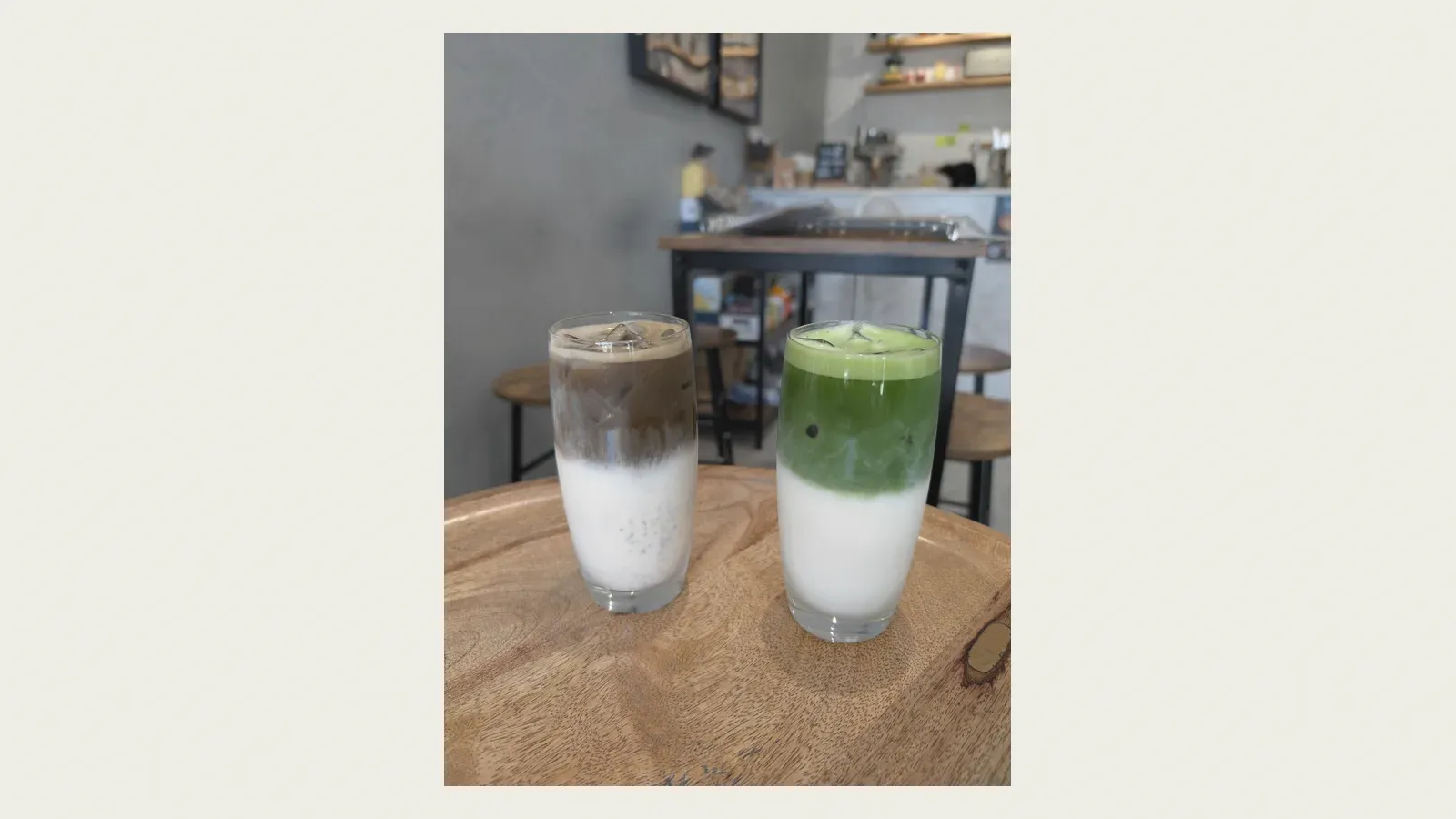
The hōjicha latte is the drink cafés reached for when matcha got expensive, and it has one failure mode that shows up in almost every home version: it tastes like slightly brown milk. Not bitter, not clumpy, just faint. The matcha latte fails by clumping and the hōjicha latte fails by disappearing, and the fix is a matter of strength and order rather than equipment.
One thing needs settling before you start. Hōjicha powder and brewed hōjicha leaf do not make the same drink, and most recipes online quietly assume one or the other without saying which.
Two drinks, not two methods
| Powder | Brewed leaf | |
|---|---|---|
| Body | Opaque, dense, café-style | Translucent, lighter |
| Flavour | Roast forward, holds against milk | More tea-like, more easily buried |
| Water temperature | 80°C or lower | Near boiling |
| Effort | Whisk 20 seconds | Brew a concentrate, then strain |
| Best for | The drink you order out | Something closer to tea with milk in it |
Hōjicha powder is roasted leaf milled fine, so drinking it means consuming the whole leaf in suspension, the way matcha works. Brewed hōjicha is an infusion, and everything not extracted in the steep stays in the pot.
That distinction drives the rest of this. Pick powder for the café drink. Pick leaf if you already keep good hōjicha in the cupboard and want to use it.
The temperature rule flips when you switch to powder
Our guide to hōjicha says to brew it near boiling, and that is right for the leaf. The roast has already stripped out most of the astringency, so Ippodo’s standard cup runs 10 g of leaf into 240 ml of water at a full 100°C for thirty seconds 5, and the tea shrugs off a heavy hand with the kettle.
Every hōjicha powder recipe says the opposite. Hojicha Co. sets 80°C and warns that boiling water leaves a bitter drink 1. Just One Cookbook uses the same 175°F 3. The two rules look contradictory and are not.
The powder method
Published ratios sit close together, which is a good sign. Hojicha Co. uses 1 teaspoon of powder to 60 ml of water and 180 ml of milk 1. Mizuba specifies 2 to 3 g to about 1 oz of water and 8 to 12 oz of milk 2. Just One Cookbook uses 1½ teaspoons to 2 tablespoons of water and ¾ cup of milk 3.
Take the middle of that as a starting point:
| Step | Amount |
|---|---|
| Hōjicha powder | 2–3 g (1 heaped tsp), sifted |
| Water | 60 ml at 80°C |
| Milk | 180 ml, steamed to 60–68°C |
| Sweetener | Optional, and usually unnecessary |
Sift the powder into the cup, add the water, and whisk until the surface is smooth and lightly foamed — Just One Cookbook whisks in a W, which is the same motion that works for matcha and takes about fifteen to twenty seconds 3. Then steam the milk and pour it into the base, not the other way round. Milk added to a wet, dispersed paste incorporates cleanly; powder dropped into milk clumps and stays clumped, exactly as it does with matcha.
Do not overheat the milk. Just One Cookbook targets 140 to 155°F, roughly 60 to 68°C 3, which is where dairy tastes sweetest and oat holds its foam. Push past about 70°C and you get the scalded note that flattens everything underneath it.
The brewed method, and the dilution problem
Here is where most home attempts go wrong. Milk is 70 to 75% of a latte by volume. Brew hōjicha at ordinary drinking strength, add three times its volume of milk, and you have diluted a mild tea by a factor of four. The result is not a weak hōjicha latte, it is milk with a suggestion of tea in it.
A concentrate solves it. Japanese Green Tea Co. specifies about 5 g of leaf to 6 oz of water at 195°F for four minutes, topped with 8 oz of steamed oat milk 4. Note what is doing the work there. The leaf loading is not dramatically higher than a normal cup — the steep time is eight times longer. Hōjicha tolerates that because the roast has already removed the catechins that would turn a four-minute sencha undrinkable 6, which is the one property that makes this drink possible at all.
So: more time, not just more leaf. Then strain thoroughly, because leaf left sitting in a concentrate you are about to cut with milk will keep extracting while you froth.
Iced
The iced version is easier and the ratios barely change. Make the base at the same strength, let it cool, then build the glass in the order that keeps the layers: milk and ice first, base poured over the top 2. It will settle into a two-tone drink for a minute before it merges.
Make one adjustment for the ice. It melts into the glass and dilutes it a second time, so if you are serving over a full glass of ice, take the powder to the top of the range at 3 g, or make the brewed concentrate at four minutes rather than three.
Which milk
Hōjicha is more particular about milk than matcha is, because its flavour comes from roasting rather than from shading, and roasted notes sit in the same register as several plant milks.
Oat is the default for good reason. Its grain sweetness runs in the same direction as the toast instead of across it, and barista formulations froth to a stable microfoam 8. Japanese Green Tea Co. puts it plainly: oat mirrors hōjicha’s roasted, grain-like character, where almond competes with the roast for attention 4.
Whole dairy gives the creamiest body and the sweetest result when steamed correctly 8. Just One Cookbook recommends whole or 2% 3. It is the better choice if you want the tea to read as a dessert drink.
Soy froths hardest of the plant milks on the strength of its protein 8, and its beany background is a real match for a dark roast, though it fights a light one.
Almond is the weakest fit. It runs thin, adds a competing nuttiness, and can curdle if it is heated fast 8.
Skip the syrup
This is the judgment the recipes tiptoe around. Hojicha Co. adds maple, Mizuba suggests maple and cinnamon, Just One Cookbook lists half a teaspoon of sugar and then notes the author does not use it 3.
Side with the last one. Roasting at 150 to 200°C runs the Maillard reaction across the leaf, forming the pyrazines and furans that read as toast, caramel, and nut 6. Those compounds are perceived as sweetness without being sugar, and the roast has simultaneously stripped out most of the bitterness that would need balancing. A matcha latte often does want a little sweetener, because it is fighting the astringency of a shaded first-flush leaf. Hōjicha has no such fight, and syrup buries the aromatics that took the roaster all that heat to build.
If the drink still tastes thin without sugar, the base is too weak. Sweetening it is treating the symptom.
Why make this instead of a matcha latte
Two reasons, and neither is that hōjicha is a matcha substitute.
The first is caffeine. A 250 ml cup of hōjicha carries around 7.7 mg 7, against roughly 28 mg for a steeped green tea and about 96 mg for an 8 oz brewed coffee 9. Roasting reaches near 200°C, past the 178°C at which caffeine sublimes, and the bancha and kukicha that hōjicha is roasted from were low in caffeine to begin with 7. That makes it one of the few hot drinks with real flavour you can have at nine in the evening. Our piece on caffeine and L-theanine sets out how differently the two teas behave.
The second is price. Hōjicha is made from the coarse leaf and stems left over when finer teas are graded, so it sits outside the auction pressure that has driven tencha to records. It is the one Japanese tea getting relatively cheaper while matcha climbs.
What it is not is a swap. The matcha latte is a green, vegetal, faintly astringent drink held up by umami. This one is brown, toasted, and sweet-tasting without sugar. They share a format and nothing else, which is the best argument for keeping both in the cupboard — and for occasionally putting the milk aside and drinking the hōjicha plain, off a full boil, the way the rest of the Japanese leaf is meant to be met.
Sources
9sourcesHojicha Co.
SupportsHot hojicha latte: 1 tsp hojicha powder, 60 ml water at 80°C (175°F), 180 ml milk (oat used), optional 1 tsp maple syrup. Whisk powder and water, add sweetener, steam and froth milk, pour. 'Avoid boiling water that will leave you with a bitter tasting drink, and instead always use water that is 80°C (175°F) or lower.' Oat recommended because it pairs with the roasted tea and froths well
Mizuba Tea Co.
Supports2–3 g (1 tsp) powdered hojicha, about 1 oz hot water whisked until fully integrated, then 8–12 oz milk or milk alternative; hot version frothed and poured, iced version poured over ice and topped with milk; optional cinnamon and maple
Just One Cookbook
Supports1½ tsp hojicha powder sifted, 2 Tbsp water at 175°F (80°C), whisked in a W pattern until smooth and foamy, ¾ cup milk steamed to 140–155°F; whole or 2% recommended, oat and almond acceptable; optional ½ tsp sugar, not added by default
Japanese Green Tea Co.
SupportsBrewed concentrate method: 'about 5g leaf to 6oz water for 4 minutes at 195°F', then topped with 8 oz steamed oat milk. Oat milk has natural sweetness and a slight oat-flavour body that mirrors hojicha's roasted, grain-like character; almond competes with the roast
Ippodo Tea
SupportsStandard hojicha brew for drinking plain: 10 g leaf, 240 ml water at 100°C (boiling), 30 s steep; hojicha is forgiving and does not turn bitter with over-brewing
Kametani Tea
SupportsRoasting at roughly 150–200°C drives the Maillard reaction; catechin levels fall, lowering astringency; pyrazines and furans form and carry the roasted, nutty aroma
Hojicha Co.
SupportsAbout 7.7 mg caffeine per 250 ml cup; roasting reaches around 200°C and caffeine sublimes near its 178°C boiling point; bancha and kukicha raw materials already low, kukicha lowest
Matcha Sense
SupportsMilk behaviour: barista oat froths to a stable microfoam and is naturally sweet; whole dairy is creamiest; soy froths hardest on high protein; almond runs thin and can curdle if heated fast
Mayo Clinic
SupportsCaffeine reference: brewed coffee about 96 mg per 8 oz, steeped green tea about 28 mg per 8 oz
Common questions
Should I use hōjicha powder or loose leaf for a latte?
Powder if you want the roasted flavour to hold up against milk, which is what most people are after. Loose leaf if you want something lighter and more tea-like, and are willing to brew a proper concentrate rather than a normal cup. Powder is also the only version that gives you the opaque, café-style body.
Why does hōjicha powder need cooler water when loose hōjicha is brewed at boiling?
Because you drink the powder. Brewing leaf is selective — you pull what dissolves in thirty seconds and throw the leaf away — so near-boiling water is safe and helpful. With powder nothing is discarded, so hot water drives the harsher fractions straight into the cup. Recipes converge on 80°C or lower.
Does a hōjicha latte have caffeine?
Very little. Hōjicha runs around 7.7 mg per 250 ml cup, against roughly 96 mg for an 8 oz brewed coffee. High roasting heat drives most of the caffeine off, and the bancha and kukicha it is made from were low to begin with. It is low-caffeine, not caffeine-free.
What milk works best with hōjicha?
Oat, if you want the roast reinforced — its grain sweetness runs in the same direction as the toasted notes, and barista oat froths to a stable microfoam. Whole dairy gives the creamiest texture. Almond is the weakest match here, thin in body and inclined to compete with the roast rather than carry it.