The Leaf
Matcha vs Coffee: Caffeine, Cost, and What a Switch Involves
Matcha is not cheaper than coffee. The 2026 numbers on caffeine per serving, cost per cup at home, café margins, and what switching involves in practice.
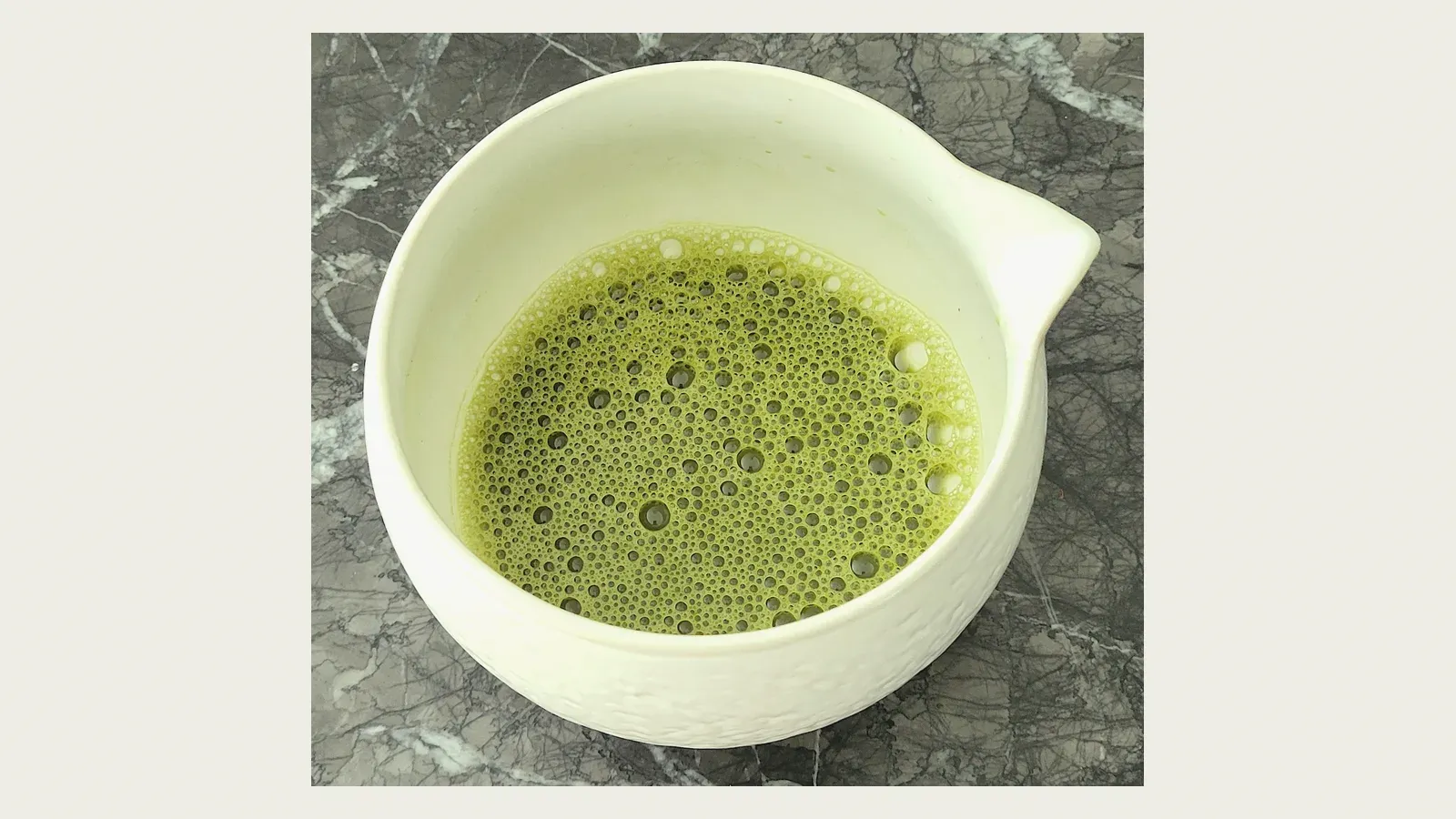
The pitch is familiar. Give up the daily latte, buy a tin of matcha, get calmer energy and save money doing it. Two of those three hold up. The saving does not, and the arithmetic has moved sharply against it over the last eighteen months.
All figures below are 2026 and in US dollars, since that is the currency the price series are published in.
The caffeine, matched
Start with the number people are trying to replace.
| Drink | Caffeine |
|---|---|
| Drip coffee, 8 oz | ~96 mg 4 |
| Matcha, 2 g bowl | ~35–80 mg 56 |
| Matcha, 3–4 g café scoop | ~60–120 mg |
| Steeped green tea, 8 oz | ~28 mg 4 |
| Hōjicha, 250 ml | ~7.7 mg 10 |
Published analyses put matcha between roughly 16 and 40 mg of caffeine per gram, which is why the range on a single bowl is so wide 56. Matcha holds more caffeine per gram of dry tea than any steeped leaf, because you consume the leaf instead of an infusion of it. The serving is small enough that this still lands under a mug of coffee.
Practically: one bowl replaces about two-thirds of a coffee. Two bowls exceed one. If you drink three coffees a day, matcha will not carry that load without you drinking a great deal of it, which is where the cost problem starts. Our piece on caffeine and L-theanine covers what controlled trials do and do not show about the quality of the alertness.
What a cup of each costs at home
Coffee first. US grocery prices for roasted ground coffee hit an all-time recorded high of $9.72 a pound in April 2026 1, a series the Bureau of Labor Statistics has kept since 1980. That works out to about 2.1 cents a gram. A home cup uses somewhere between 10 and 18 g depending on how you brew it, so:
| Brew | Dose | Cost per cup |
|---|---|---|
| Drip / filter | 10–15 g | $0.21–0.32 |
| Espresso | 18 g | $0.39 |
Now matcha. Retail in 2026 puts genuine ceremonial grade at $0.55 to $0.80 a gram, with high-end tins from $0.80 to $1.50 and a 30 g starter tin of the real thing at $18 to $30 2.
| Preparation | Dose | Cost per serving |
|---|---|---|
| Usucha (thin tea) | 2 g | $1.10–1.60 |
| Café-style scoop | 3 g | $1.65–2.40 |
| High-end ceremonial | 2 g | $1.60–3.00 |
The gap is five to tenfold, and it is larger than that per milligram of caffeine, because the bowl also carries less. A tin advertised at $28 is not expensive on its own terms. It is expensive relative to the thing it is being sold as a replacement for.
Why the café charges more for the cheaper drink
Here is the part that surprised us. A café pays less for the matcha in your cup than for the espresso in someone else’s.
At latte-grade wholesale of $60 to $90 a kilogram, a 3 g matcha dose costs the shop $0.18 to $0.30. An 18 g espresso dose at specialty green-coffee pricing costs $0.35 to $0.55 3. Yet the matcha latte goes on the board at $8 to $10 while the caffè latte sits near $5.50, producing a gross margin of 82.9% against 74.4% and about $1.30 more profit per cup 3.
Two things follow. The first is that the premium you pay for café matcha is positioning, not ingredient cost. The second explains the apparent contradiction with the section above: cafés buy latte-grade powder at $60–90/kg, or 6 to 9 cents a gram, while you buy 30 g retail tins of ceremonial at 55 to 80 cents a gram. Roughly an eightfold difference, part grade and part the cost of putting anything in a small tin. Our price reference separates the four different matcha and tencha numbers that routinely get quoted as though they were one.
Both drinks are in a price crisis, for opposite reasons
The comparison is a moving target, because neither commodity is stable.
Coffee is up 105% since April 2021 and 29% year on year to April 2026, with instant up 22.8% 1. That is a supply shock: drought through the 2024–25 Brazilian harvest and weather damage to Vietnamese robusta.
Matcha is a demand shock. Machine-picked tencha at the 2026 Kyoto first market averaged ¥13,972 a kilogram, about 1.7 times the previous record 8, and wholesale on the 2025 crop rose 75% at the top of the ceremonial range, 50% in the middle, and 30% for culinary, with retail following 15 to 20% into early 2026 7. Nothing failed in the fields. Demand outran a crop that takes years to expand, as the shortage sets out.
One of these resolves faster than the other. Coffee harvests recover in a season or two once the weather turns; tencha requires converting fields, building shade structures, and waiting for bushes, which is why the matcha side of this comparison is likelier to stay expensive.
What changes when you switch
Cost aside, three things are different and only one of them is about flavour.
The preparation is not optional. Matcha is a suspension, not an infusion, so it needs sifting and whisking or it clumps. That is a sieve, a bowl, and a chasen before you start — see the starter kit for what is needed and what is decoration, and how to whisk for the motion. It takes about a minute, every time, and there is no version of matcha that pours itself while you do something else.
The first bowl usually disappoints coffee drinkers. It is vegetal, savoury, faintly sweet, and thicker in the mouth than expected, with none of the roasted bitterness that coffee trains you to read as strength. If it is harshly bitter rather than savoury, that is usually grade or water temperature rather than the tea itself — why matcha turns bitter covers both. Note also that “ceremonial grade” is unregulated and means nothing on its own 9.
The dose is easier to control. This is matcha’s real practical advantage over coffee and it goes unmentioned in most comparisons. You measure the powder, so you know what you are taking. A café coffee is an unknown quantity of an unknown roast at an unknown dose, which is a poor tool for anyone tapering caffeine or protecting their sleep.
What coffee still does better
Cost, by a wide margin. Speed, because a machine or a filter does the work. Caffeine per unit of effort, if a hard 96 mg at 7 a.m. is the point. And range, since coffee spans an enormous flavour territory that matcha, a single preparation of a single leaf, does not attempt.
So who should switch
Switch if you want a controlled, moderate dose and a drink you can hold an opinion about, and you accept that it will cost more per cup than brewing at home. Switch if the coffee you are replacing is a daily café purchase, in which case the money does work out — though it would work out further with a bag of beans.
Do not switch to save money on a home habit, and do not switch expecting caffeine parity from one bowl. If cutting caffeine is the actual goal, hōjicha does that job better than matcha at a tenth of the price, and the thick-tea preparation at the other extreme shows how far the same powder can be pushed in the opposite direction. Matcha earns its place on the shelf as its own drink. It makes a poor substitute and an interesting habit, and the honest reason to keep a tin is the second one.
Sources
10sourcesDaily Coffee News, citing US Bureau of Labor Statistics via FRED
SupportsAverage US grocery price for a pound of roasted ground coffee: $9.72 in April 2026, an all-time high in a series BLS has tracked since 1980; $9.60 in March 2026; about $7.52 in April 2025 (+29% year on year); about $4.74 in April 2021 (+105%); instant coffee up 22.8% year on year. Published 12 May via the St. Louis Fed's FRED database
Matcha Sense
Supports2026 retail: ceremonial $0.50–1.50/g, roughly $25–75 for a 50 g tin; genuine ceremonial $0.55–0.80/g; high-end $0.80–1.50/g; entry-level 'ceremonial' $0.45–0.55/g; culinary $0.10–0.40/g. A 30 g starter tin of genuine ceremonial quality runs $18–30, a 40 g tin $22–40
First Agri B2B, Matcha for Cafés 2026
SupportsCafé economics: a 3 g matcha dose costs $0.18–0.30 at latte-grade wholesale of $60–90/kg; per-cup COGS 3 g at $75/kg = $0.225, against an 18 g espresso dose at $30/kg = $0.540. Matcha latte gross margin 82.9% vs caffè latte 74.4%; per-cup gross profit delta $1.30. Menu $8–10 for a specialty matcha latte, $6.50–8.50 for 12 oz in New York, caffè latte regional average $5.50
Mayo Clinic
SupportsBrewed coffee about 96 mg caffeine per 8 oz; steeped green tea about 28 mg per 8 oz
Molecules (MDPI), 2021 review
SupportsEstimates a standard 2 g matcha serving at roughly 60–80 mg caffeine
Antioxidants (MDPI), 2022
SupportsMeasured 16.1 mg caffeine per gram in native matcha by HPLC — the low end of the published range
One with Tea, 2026 Matcha Industry Outlook
SupportsWholesale increases on the 2025 crop: top ceremonial +75%, mid +50%, culinary +30%; retail up 15–20% from late 2025 to early 2026
Global Japanese Tea Association, Japanese Tea Report May 2026
Supports2026 Kyoto first tencha market: machine-picked average ¥13,972/kg, about 1.7× the previous record of ¥8,235
Naoki Matcha
SupportsNo organization regulates 'ceremonial grade'; Japan has no standardized matcha grading system
Hojicha Co.
SupportsAbout 7.7 mg caffeine per 250 ml cup of hojicha; roasting drives off most of the caffeine
Image: Pinnaclematcha, Wikimedia Commons · CC BY-SA 4.0
Common questions
Does matcha have more caffeine than coffee?
Not per serving. A 2 g bowl lands somewhere around 35 to 80 mg depending on the powder and the scoop, against roughly 96 mg for an 8 oz mug of drip coffee. Matcha carries more caffeine per gram of dry tea, because you swallow the leaf rather than steeping it, but the serving is much smaller.
Is matcha cheaper than coffee?
Only against café coffee. Brewing at home, a pound of ground coffee at the April 2026 US average of $9.72 works out to roughly 20 to 30 cents a cup, while 2 g of genuine ceremonial matcha costs $1.10 to $1.60. The saving people report comes from giving up the café habit, not from the switch of drink.
Will matcha give me the same energy as coffee?
It will give you less caffeine per serving, arriving more gradually because you are drinking a suspension of whole leaf rather than a fast extraction. Many drinkers report a steadier curve. How much of that is L-theanine and how much is the smaller dose and the slower ritual is not settled by the evidence.
What should I drink instead of an afternoon coffee?
If the goal is cutting caffeine rather than switching flavours, hōjicha does it better than matcha. Roasted green tea runs around 7.7 mg per 250 ml cup, a fraction of either matcha or coffee, and it costs a fraction of both.