The Leaf
The Matcha Shortage, Explained: Prices, Causes, What's Next
Tencha output has nearly tripled in a decade, yet matcha keeps getting scarcer and dearer. What the 2026 auction figures show, and what to do about it.
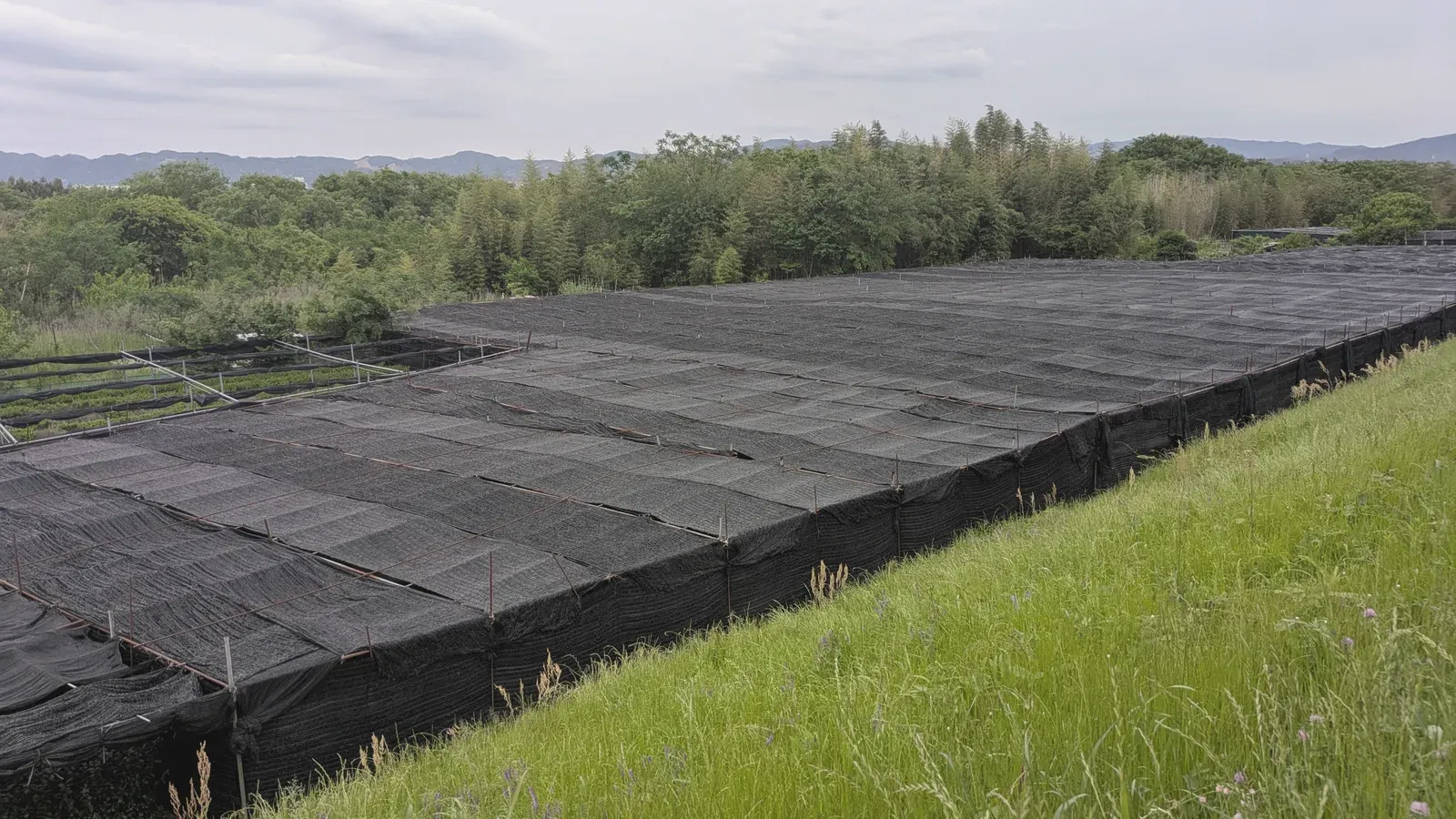
Japan is producing more matcha than at any point in its history — tencha output reached 5,336 tonnes in FY2024, about 2.7 times the FY2014 figure. Demand grew faster. Growers are meeting it by converting fields away from sencha and bancha, so the visible casualties are hōjicha, genmaicha and everyday leaf, which producers have started discontinuing. Prices at the 2026 Kyoto tencha market averaged 13,972 yen a kilogram, roughly 1.7 times the previous record, and new plantings will not reach shelves in volume until around 2030.
On 19 February 2026 the Kyoto tea house Ippodo posted a notice to its customers. Five products were being discontinued from the first of March: Gokujo Hōjicha, Gokujo Genmaicha, Kuki Hōjicha, Wakayanagi, and the one-cup hōjicha teabags. A sixth, the drip hōjicha bag, went temporarily unavailable. More suspensions and purchase limits might follow 5.
Four of those five are roasted or blended everyday teas. None of them is matcha.
That notice is the clearest single piece of evidence about what is happening to Japanese tea, and it points somewhere other than where the headlines do. The reason Ippodo gave was matcha: producer prices for it had risen 2.6 times in a year, which made shaded cultivation far more profitable than growing the coarse leaf that becomes bancha and hōjicha 5. Growers followed the money. The tea that lost its fields was the cheap stuff.
What the auction numbers say
Start with the wholesale market, because that is where the pressure shows first and cleanest.
At the season’s first tencha market at the JA Zen-Noh Kyoto Uji distribution centre in Jōyō, farmers submitted 375 lots totalling roughly 25 tonnes. Machine-picked tencha averaged ¥13,972 a kilogram, about 1.7 times the previous record of ¥8,235 set the year before 1. Kagoshima’s tencha event, 27 factories and 5.8 tonnes, averaged near ¥19,000 — roughly 1.8 times its own prior year 1.
Set that against the run-up and the shape becomes obvious.
| Kyoto first tencha market | Average, machine-picked |
|---|---|
| 2022 | ~¥3,800/kg |
| 2023 | ~¥4,800/kg |
| 2024 | ~¥6,000/kg |
| 2025 | ¥8,235/kg (record at the time) |
| 2026 | ¥13,972/kg |
The 2022–2025 figures come from Ooika, a Uji producer that publishes the series 6; the 2026 average is GJTA’s 1.
Two other numbers from the same spring complicate the story. At Uji on 24 April, the market average came in at ¥20,879/kg against ¥17,098 the year before, and a gyokuro lot topped out at ¥500,000/kg 2. At Shizuoka on 20 April, a single lot cleared ¥1.18 million against ¥880,000 the previous year — while the market average fell, to ¥9,019/kg 2.
Shizuoka is Japan’s sencha heartland. Its average went down in the same season Kyoto’s tencha average went up seventy percent. Whatever is happening, it is not happening to Japanese tea as a whole.
Japan is making more matcha than ever
Here is where the word “shortage” starts to mislead.
Tencha production reached 5,336 tonnes in FY2024, roughly 2.7 times what Japan made in FY2014 4. The category has been the one growth story in a shrinking industry: national aracha output sat near 75,100 tonnes in FY2025 across about 33,400 hectares, and Kagoshima has now outproduced Shizuoka for two consecutive years, 30,000 tonnes to 24,100 4. Kagoshima also passed Kyoto to become the largest tencha prefecture, turning out around 2,150 tonnes in 2024, close to forty percent of the national total 14.
Capital is following. Miyazaki Tea Garden opened a ¥1.2 billion tencha processing plant in May 2026, in a prefecture whose tea acreage has fallen 20 to 30 percent over two decades 3. In Koka City, Shiga, tencha cultivation rose about seventy percent in a single harvest season 1. In Wazuka, the hill town south of Kyoto, near enough the whole district had converted to tencha by 2025 6.
So the fields are expanding and the factories are being built. What, then, is scarce?
The top of the range. Hand-picked Uji tencha fell roughly 40 percent between 2024 and 2025, and even mechanised first-harvest tencha was down about 18 percent 7. Hand-picked tencha now trades between ¥45,000 and ¥60,000 a kilogram 6. Only a few hundred farmers in Japan grow tencha to that standard at all, and the leaf is concentrated in Uji, Nishio, Kagoshima and Shizuoka, which leaves the system no slack when a bad spring lands on one of them 8.
More tonnage, less of the good stuff, and a demand curve that wants precisely the good stuff. That is the whole mechanism.
The conversion, and who pays for it
Every hectare newly under shade came from somewhere. Tencha earned ¥3,278 a kilogram at the farm gate in 2024, first-flush tencha ¥3,891 — against ¥1,197 for sencha 4. A grower reading those three numbers has an easy decision, and the decision is being made across the country.
The cost lands on the teas nobody was writing headlines about. Bancha and kukicha are byproducts of a sencha-and-gyokuro industry: coarse late leaf, sorted stems. Shrink that industry and the byproducts shrink with it. Roast those byproducts and you have hōjicha, which is how one of Kyoto’s most established houses came to cancel four roasted and blended lines in a single notice 5. Shade stress also cuts the second harvest, and summer heat has made field labour harder to schedule 5.
Meanwhile the domestic drinker has been quietly leaving. Japanese household consumption of tea fell about 40 percent between 2008 and 2023, while exports rose ninefold 6. In FY2025 green tea exports hit 13,125 tonnes, up 42 percent, worth ¥84.7 billion — and powdered tea made up roughly 70 percent of that volume 7. Japan increasingly grows matcha for people who do not live there.
Why it cannot be fixed quickly
A tea bush takes four to five years to reach full production, and yields stay modest even then. Plantings made in response to today’s prices reach shelves in meaningful volume around 2030 8.
The people are the harder constraint. Japan had 53,687 tea farms in 2000. By 2015 the count was 19,603, and by 2024 roughly 12,000. Over seventy percent of the remaining growers are past 65 6. Building and dismantling shade structures every season is heavy work, hand-picking is heavier, and neither has an obvious successor generation.
Then the processing itself refuses to hurry. A granite stone mill turns out about 40 grams of matcha an hour, and running it faster scorches the powder. The full chain — thirty to forty days under shade, steaming within hours of the pick, drying flat, winnowing off stem and vein — is laid out in what is tencha. Every step has a physical limit, and the industry has been pushing against all of them for five years.
What the next few years hold
The near term is legible enough. Trade forecasts put 2026 auction prices at or slightly above 2025’s, with another five to ten percent still to arrive at retail as expensive stock clears inventory 7. Nothing in the 2026 spring data contradicts that: Kagoshima’s first auction opened 60 percent up on the year 2, and Kyoto’s whole-season transaction value was projected to roughly double to ¥10.4 billion, with tencha making up about 90 percent of the trade 1.
The medium term depends on the plantings and the plants. Wazuka converted, Koka added seventy percent in a season, Miyazaki spent ¥1.2 billion on a factory, and Kagoshima is now the largest tencha prefecture in the country 136. All of that is real capacity. Most of it produces properly around 2030 8.
What I would watch for is the quality question nobody is asking loudly yet. A rush of new tencha acreage means marginal land, younger bushes and growers learning a demanding crop under commercial pressure, and the first tonnage off those fields will not be Uji hand-picked. More matcha will reach the market at the bottom and middle of the range. There is little reason to expect much more of the top, which is the part that was scarce to begin with. If that is how it plays out, the price gap between a decent everyday matcha and a first-rate one widens rather than closes, which is the opposite of what a supply recovery is supposed to do.
What it costs, and what to do
On the 2025 crop, wholesale rose about 75 percent for top ceremonial grades, 50 percent for mid grades and 30 percent for culinary 7. Retail moved roughly 15 to 20 percent through late 2025 and into 2026, and more of the wholesale increase is still working through inventory 7. At the very top, Ooika reports heritage matcha that sold near $49 for 20 grams now going for over $100 6. Japanese retailers are expected to shrink pack sizes or lift prices around 20 percent 1. Trade forecasts do not expect a fall — the 2026 auctions are projected to hold at or slightly above 2025 7.
Three responses make sense. One of them is where I would put my own money.
Buy less, better, and fresher. A 20 gram tin you finish in three weeks beats a 100 gram tin oxidising on the shelf, and at ¥13,972 a kilo wholesale the waste has stopped being trivial. Matcha fades fast once opened. How to store matcha covers the cold-storage handling that now pays for itself in a month.
Stop paying for the word on the front. “Ceremonial grade” is unregulated, and a tight market is exactly when the term gets stretched furthest. Judge a tin on stated harvest, named origin, colour and price per gram, as ceremonial vs. culinary matcha sets out. If a bargain tin looks impossible against ¥45,000-a-kilo hand-picked leaf, it is.
Drink the teas the boom is orphaning. This is the one I would push hardest. Hōjicha, bancha, kukicha and honest everyday sencha — four of the seven Japanese green teas — are being squeezed out of the fields because they were never fashionable, and they are now the best value in Japanese tea by a distance. A dark-roast hōjicha brewed strong off a full boil costs a fraction of a bowl of matcha and forgives every mistake you can make with a kettle. Buying it also sends money to the exact part of the industry being converted away. If you would like these teas to still exist in 2030, that is the lever you have.
Some perspective on the prices, from the tradition itself. Under Nobunaga a single famous tea caddy could be valued at the worth of a fief, and utensils were granted, hunted and confiscated as instruments of rank — the story is in warrior tea. Rikyū’s answer to that market was a two-mat room and a bowl worth nothing in particular. The auction floor at Jōyō will do what auction floors do. The leaf still takes four to five years to grow, the mill still turns at 40 grams an hour, and about 12,000 households are still doing the work.
Sources
9sourcesGlobal Japanese Tea Association, Japanese Tea Report (May 2026)
Supports2026 Kyoto first tencha market at JA Zen-Noh Uji Tea Distribution Center, Jōyō: machine-picked tencha average ¥13,972/kg, ~1.7× the previous record ¥8,235; 375 lots, ~25 t submitted; Kagoshima tencha event, 27 factories, 5.8 t, average ~¥19,000/kg, ~1.8× prior year; Kagoshima produced ~2,150 t tencha in 2024, ~40% of national output; raw material costs more than double; retailers expected to shrink packs or raise prices ~20%; Koka City tencha cultivation up ~70%
Global Japanese Tea Association, Japanese Tea Report (April 2026)
SupportsUji market 24 April 2026: average ¥20,879/kg, up from ¥17,098; gyokuro top bid ¥500,000/kg (~30% higher); sencha top ¥333,339/kg. Shizuoka 20 April: top ¥1.18 m/kg against ¥880,000 prior year, but average fell to ¥9,019/kg. Kagoshima first auction 6 April: averages up 60% year on year. Kyoto season transaction value projected to roughly double to ~¥10.4 bn, tencha ~90% of trade
Global Japanese Tea Association, Japanese Tea Report (June 2026)
SupportsMiyazaki Tea Garden's ¥1.2 bn tencha processing plant began full-scale operation in May 2026; Miyazaki's tea field area has fallen 20–30% over the past two decades
MAFF, Ocha wo Meguru Jōsei (March 2026), reported by Matcha Wholesale Japan
SupportsTencha production ~2.7× between FY2014 and FY2024, reaching 5,336 t; national cultivated tea area ~33,400 ha; aracha output ~75,100 t in FY2025; Kagoshima 30,000 t vs Shizuoka 24,100 t aracha, Kagoshima ahead for two consecutive years; top three tencha prefectures now Kagoshima, Kyoto, Shizuoka; 2024 farm-gate averages tencha ¥3,278/kg (first flush ¥3,891) vs sencha ¥1,197/kg
Ippodo Tea, supply notice (19 February 2026)
SupportsProducer prices for matcha rose 2.6× year on year, making shaded cultivation more profitable than bancha; smaller second harvests from shade stress; heat-related labour difficulty. Five products discontinued from 1 March 2026: Gokujo Hojicha 200 g, Gokujo Genmaicha 200 g, Kuki Hojicha 200 g, Wakayanagi 200 g, One-Cup Teabag Hojicha; Drip Tea Bag Hojicha temporarily unavailable; further suspensions or purchase limits flagged
Ooika, Five Matcha Shortage Facts
SupportsKyoto first-auction tencha series: ~¥3,800/kg (2022), ~¥4,800 (2023), ~¥6,000 (2024), ¥8,235 (2025, record). Japanese tea farms 53,687 in 2000, 19,603 in 2015, ~12,000 in 2024; over 70% of growers past 65 as of 2024; hand-picked tencha ¥45,000–60,000/kg; Wazuka almost entirely converted to tencha by 2025; heritage matcha ~$49 per 20 g rising to over $100; domestic consumption down ~40% from 2008–2023 while exports rose ninefold
One with Tea, 2026 Matcha Industry Outlook
SupportsHand-picked Uji tencha down ~40% between 2024 and 2025; mechanised first-harvest tencha down ~18%. FY2025 Japanese green tea exports 13,125 t (+42%), value ¥84.7 bn, powdered tea ~70% of export volume. Wholesale increases on the 2025 crop: top ceremonial +75%, mid +50%, culinary +30%; retail +15–20% through late 2025 and early 2026; 2026 auction prices forecast to stabilise at or modestly above 2025 levels
One with Tea, The 2026 Matcha Shortage Explained
SupportsNew tea plants take four to five years to reach maturity with low yields even then; aggressive new plantings do not reach shelves in meaningful volume until roughly 2030; only a few hundred Japanese farmers grow tencha at commercial quality; ceremonial-grade tencha concentrated in Uji, Nishio, Kagoshima and Shizuoka, leaving no slack when weather hits one region
Kettl, Matcha Pricing: 2026 Update
SupportsQuotes a Kyoto first-flush machine-harvested tencha series of ¥5,402/kg (2024) and ¥14,541/kg (2025), with ~¥23,000/kg estimated for 2026 — figures that sit a year out of step with the GJTA and Ooika series, illustrating the conflicting numbers in circulation
Image: ブルースパイダー, Wikimedia Commons · CC BY-SA 4.0
Common questions
Is there really a matcha shortage?
Not in the sense of a crop failure. Japan made about 5,336 tonnes of tencha in FY2024, roughly 2.7 times the FY2014 figure, and output is still climbing. Demand has climbed faster. What is genuinely scarce is the top of the range: hand-picked Uji tencha fell about 40 percent between 2024 and 2025, and only a few hundred farmers grow tencha to that standard.
Why has matcha got so expensive?
The 2026 first tencha market in Kyoto averaged 13,972 yen a kilogram against a previous record of 8,235 yen. Wholesale increases on the 2025 crop ran about 75 percent for top ceremonial grades, 50 percent for mid grades and 30 percent for culinary. Retail followed at roughly 15 to 20 percent through late 2025 and early 2026, with more to come as expensive stock works through inventory.
Will matcha prices come back down?
Not to the old level, on the current evidence. A tea bush takes four to five years to reach full production, so plantings made now reach shelves in volume around 2030. Japan had 53,687 tea farms in 2000 and roughly 12,000 in 2024, with over 70 percent of growers past 65. Trade forecasts expect 2026 auction prices to hold at or slightly above 2025's level rather than fall.
Why is my hōjicha disappearing too?
Because matcha now pays better. Ippodo told customers in February 2026 that producer prices for matcha had risen 2.6 times year on year, pulling growers toward shaded cultivation and away from the leaf that becomes bancha. The same notice discontinued five products, four of them hōjicha, genmaicha or bancha.