The Practice
How Much Matcha to Use: Grams per Bowl, Latte and Koicha
About 2 g of matcha to 60–70 ml of water for a bowl, 4 g to 30 ml for koicha, 2–3 g for a latte. What a scoop and a teaspoon hold, and how to adjust.
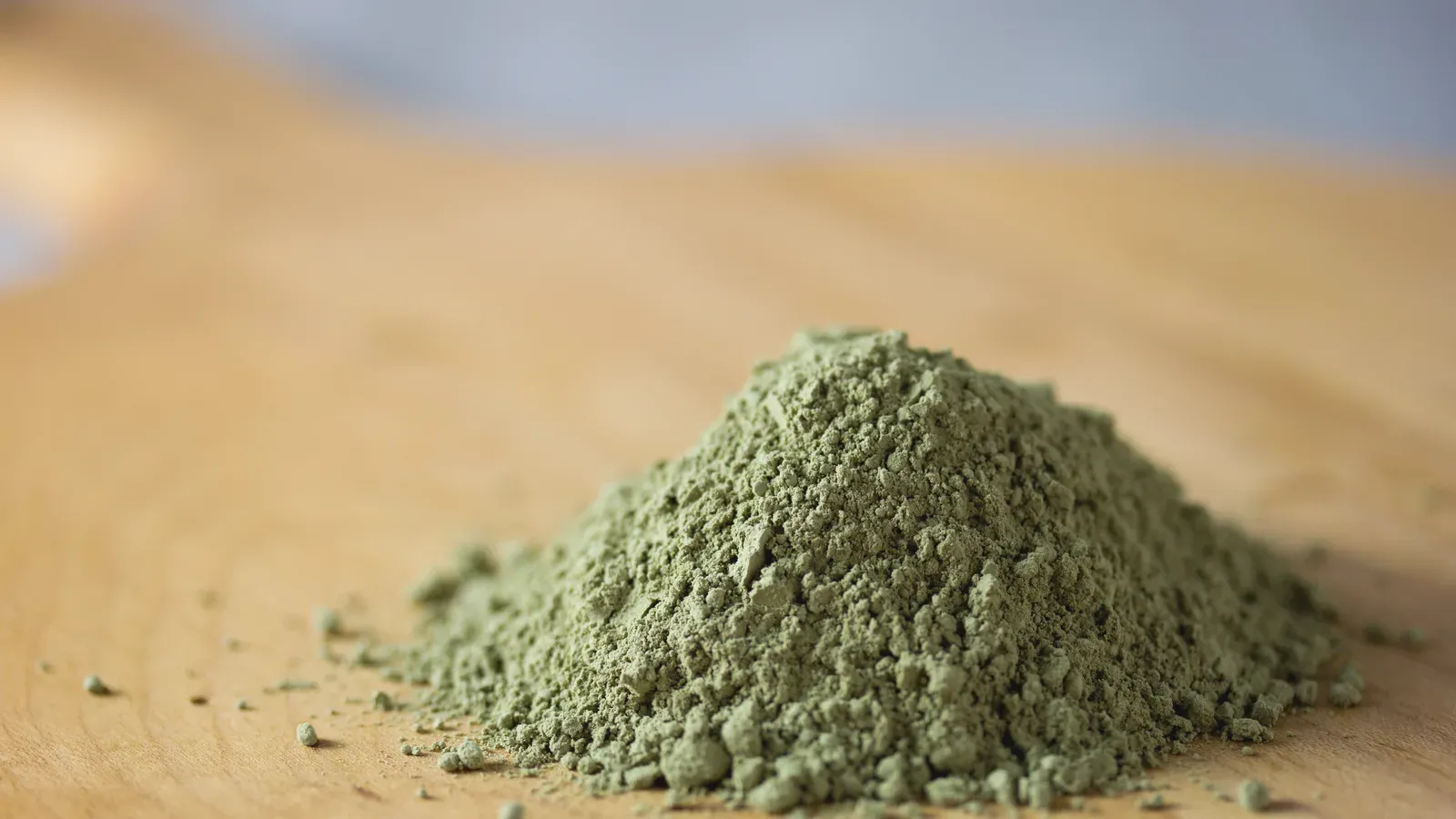
Use about 2 g of matcha, one level teaspoon, to 60–70 ml of water at 80°C for an everyday bowl of usucha. Koicha takes about 4 g to 30 ml, and a latte 2–3 g. A bamboo scoop is not a fixed unit, so weigh your powder once and learn what your own scoop holds.
Published recipes for a bowl of matcha agree to within half a gram. Ippodo, the Kyoto tea house, uses 2 g of powder to 60 ml of water at 80°C 1. Matchaeologist’s Japanese guide puts one serving at two scoops of powder to 70–80 ml 4. Where people go wrong is the measuring. A recipe written in grams gets made with a spoon, a spoon gets heaped, and the bowl that results is half again as strong as anyone intended.
The numbers at a glance
| Preparation | Matcha | Water | Ratio, powder to water |
|---|---|---|---|
| Usucha (薄茶, thin tea), the everyday bowl | ~2 g | 60–70 ml at 80°C | about 1:30–35 |
| Koicha (濃茶, thick tea) | ~4 g | ~30 ml at 80°C | about 1:7.5 |
| Hot latte, Ippodo’s recipe | 3 g | 90 ml at 80°C, then milk to taste | — |
| Latte, café style | 2–3 g | ~40 ml paste, then 150–200 ml milk | — |
| Iced latte | 2–3 g | ~40 ml paste, then cold milk and ice | — |
Usucha and koicha follow Ippodo’s two recipes 12. Set side by side, they make koicha exactly four times as concentrated: twice the powder in half the water. The café-style proportions are this site’s own, worked through in the matcha latte guide.
Grams, scoops and teaspoons
The bamboo scoop, the chashaku (茶杓), is the traditional measure, and it is the least consistent one in the kit. Matchaeologist gives the usual rule of thumb, that one scoop holds about a gram, and adds straight away that the real amount varies from person to person 4. Ippodo’s own recipes show how far it moves. Its usucha is 2 g, written as one and a half heaped scoops 1. Its koicha is 4 g, written as three heaped scoops 2. Its latte is 3 g, also written as three heaped scoops 3. One house, one scoop, and the heap runs from about a gram to about a gram and a third.
A teaspoon behaves better, because its volume is fixed. Both sources put a level 5 ml teaspoon at about 2 g of matcha, and Ippodo gives a koicha serving as two level teaspoons 124. The word that matters is level. Draw a knife across the spoon and you get the recipe. Heap it and you get something closer to 3 g.
Weigh once, then stop weighing. Put your usual spoonful, or your usual two scoops, on a kitchen scale that reads to a tenth of a gram. Whatever it shows is what your hand and your scoop deliver, and every bowl after that can be measured by eye against it. The reading holds for as long as you keep the same scoop.
Usucha: about 2 g to 60–70 ml
Two grams is the anchor. The water is where the bowl gets tuned. Ippodo’s 60 ml gives a fuller, more concentrated bowl 1. Matchaeologist’s 70–80 ml gives a lighter one with the same two scoops 4. Both use water off the boil, around 80°C.
When a bowl tastes thin, take water away before you add powder. Going from 70 ml to 60 ml strengthens the bowl without changing the dose, and it keeps the balance between sweetness and bitterness where the leaf put it. Adding powder raises everything together, the bitterness included, and a heavy hand is one of the common reasons a bowl turns harsh. The other reasons, and how to tell them apart, are in why matcha tastes bitter.
Sift the 2 g into a warmed, dry bowl, add the water, and whisk briskly for about fifteen seconds 1. The full technique, wrist and all, is in how to whisk matcha.
Koicha: about 4 g to 30 ml
Thick tea doubles the powder and halves the water. Ippodo’s recipe is 4 g of matcha, three heaped scoops or two level teaspoons, with just enough 80°C water to cover it, 30 ml, mixed slowly for fifteen seconds 2. The slowness belongs to the method. Koicha is kneaded into a glossy paste, and a fast whisk would beat air into a tea meant to have none.
The dose also sets the grade. At four times the concentration, every flaw in the powder comes forward, so koicha needs the sweetest, most heavily shaded first-flush matcha a house sells. A usucha or culinary tin made thick tastes harsh however carefully it is kneaded. Why one bowl of koicha is traditionally shared among several guests, and how the two teas differ in the tea room, is set out in usucha vs. koicha.
Lattes: 2–3 g, and the milk decides
Ippodo’s latte uses 3 g of matcha whisked into 90 ml of water at 80°C, then milk or soy milk added to taste 3. That makes a bold, tea-forward cup. The milder café style keeps the matcha at 2–3 g, uses only about 40 ml of water to whisk a smooth paste, and carries the rest with 150–200 ml of milk. The same dose works over ice. Both versions, with the paste method that stops clumping, are in how to make a matcha latte at home.
Here the advice on strength reverses. In a plain bowl, a weak cup calls for less water. In a latte, a weak cup calls for more powder, half a gram to a gram at a time, because milk and any sweetener round off the extra bitterness that would spoil usucha. Cutting the milk works too. It just makes a smaller drink.
How much matcha a day
Because you drink the whole leaf, caffeine follows the gram weight of the powder. Measurements vary with the tea and the lab. A 2022 study in Antioxidants measured 16.1 mg of caffeine per gram in native matcha 5, and a 2021 review in Molecules reports a range of 18.9 to 44.4 mg per gram across matcha samples 6. Multiplied out:
| Serving | Matcha | Caffeine, at 16–44 mg/g |
|---|---|---|
| Usucha | 2 g | about 30–90 mg |
| Latte | 3 g | about 50–130 mg |
| Koicha | 4 g | about 65–180 mg |
For a reference point, the European Food Safety Authority judges that single doses of caffeine up to 200 mg, and up to 400 mg a day from all sources, raise no safety concerns for healthy adults. In pregnancy and while breastfeeding, its figure is 200 mg a day 7. On the high measured value, nine grams of matcha, four or five bowls of usucha, reaches 400 mg before a cup of coffee or any other tea is counted. On the low value it takes about twenty-five grams. Most tins will sit somewhere between, and the label rarely says where. What that caffeine does alongside matcha’s L-theanine, and how thin the evidence is, is covered in matcha, caffeine and L-theanine.
Adjusting a bowl that came out wrong
| What the cup does | Likely cause | Change |
|---|---|---|
| Thin, watery, little body | Too much water for the dose | Drop to 60 ml before adding powder |
| Thick, chalky, sharp | Heaped scoop or spoon | Weigh the dose; return to 2 g |
| Bitter at a correct dose | Water too hot, or a stale tin | Cool the water to about 80°C; see the bitterness guide |
| Latte tastes mostly of milk | Dose too low for the milk | Add 0.5–1 g of matcha, or less milk |
| Koicha lumpy or stiff | Water added too fast, or too little | Cover the powder first, knead, then loosen a little at a time |
One last piece of arithmetic. A 30 g tin holds fifteen bowls of usucha at 2 g each, or seven and a half of koicha. Opened matcha keeps its colour and aroma for about a month, which is why how to store matcha advises buying a tin you can finish in that time. Fifteen bowls in a month is a bowl every other day. If you drink less than that, buy the 20 g tin.
Sources
7sourcesIppodo Tea (Global), 'Basic Usucha (Matcha)'
SupportsUsucha: 2 g of matcha, '1.5 heaped tea ladles or 1 level teaspoon'; 60 ml of hot water at 80°C; whisk 15 seconds
Ippodo Tea (Global), 'Basic Koicha (Matcha)'
SupportsKoicha: '4g of matcha (3 heaped tea ladles or 2 level teaspoons)'; '30ml of hot water (80°C)', just covering the powder; 'Mix slowly with a whisk for 15 seconds'
Ippodo Tea (Global), 'Matcha Latte'
Supports3 g of matcha ('3 heaped tea ladles'), 90 ml of water at 80°C, whisk 15 seconds, then add milk or soy milk; 'Adjust the amount of milk to suit your preference'
Matchaeologist Japan, 「茶杓2杯、2gってどれくらい?」
Supports「茶杓1杯が1gと言われますが」, with the caveat that the amount varies by person; 「一人分の抹茶は、だいたい茶杓2杯分に対してお湯の量70〜80ccが適量です」; 「小さじ1杯(5cc)がおよそ2gにあたります」
Antioxidants (MDPI), Koláčková et al. 2022
SupportsHPLC analysis: 'Caffeine, L-theanine, and theobromine contents in native matcha reached 16.1, 9.85, and 0.27 mg/g'
Molecules (MDPI), Kochman et al. 2021, 'Health Benefits and Chemical Composition of Matcha Green Tea: A Review'
SupportsCaffeine in green teas 11.3–24.67 mg/g, 'while in matcha it amounted to between 18.9 and 44.4 mg/g'
European Food Safety Authority (EFSA), caffeine topic page
SupportsHealthy adults: single doses up to 200 mg (about 3 mg/kg bw) and intakes up to 400 mg a day (about 5.7 mg/kg bw) 'do not raise safety concerns'; pregnancy and lactation: up to 200 mg a day from all sources
Image: Veganbaking.net from USA, Wikimedia Commons · CC BY-SA 2.0
Common questions
How many grams of matcha are in a teaspoon?
About 2 g in a level 5 ml teaspoon. Ippodo's usucha recipe equates its 2 g serving with one level teaspoon, and Matchaeologist's Japanese measuring guide gives the same figure. A heaped teaspoon holds noticeably more, so level the spoon with a knife if you are measuring by volume.
How many scoops of matcha go in one bowl?
Two bamboo scoops (chashaku) is the usual guide for a bowl of usucha, on the rule of thumb that one scoop holds about a gram. Scoops vary with the maker and with how heaped they are. Ippodo's own recipes count one and a half heaped scoops as 2 g in one place and three heaped scoops as 3 g in another, which is the best argument for weighing once.
How much matcha is too much in a day?
Measured matcha holds roughly 16 to 44 mg of caffeine per gram of powder. EFSA judges up to 400 mg of caffeine a day from all sources safe for healthy adults, single doses up to 200 mg, and up to 200 mg a day in pregnancy. On the high measured figure, about nine grams of matcha, four or five bowls of usucha, reaches 400 mg before any coffee or other tea is counted.