The Leaf
Is Your Matcha Real? Telling Matcha From Green Tea Powder
Japan's green tea imports rose 82% in FY2025. What separates matcha from ground green tea, which home tests work, and what a label must state.
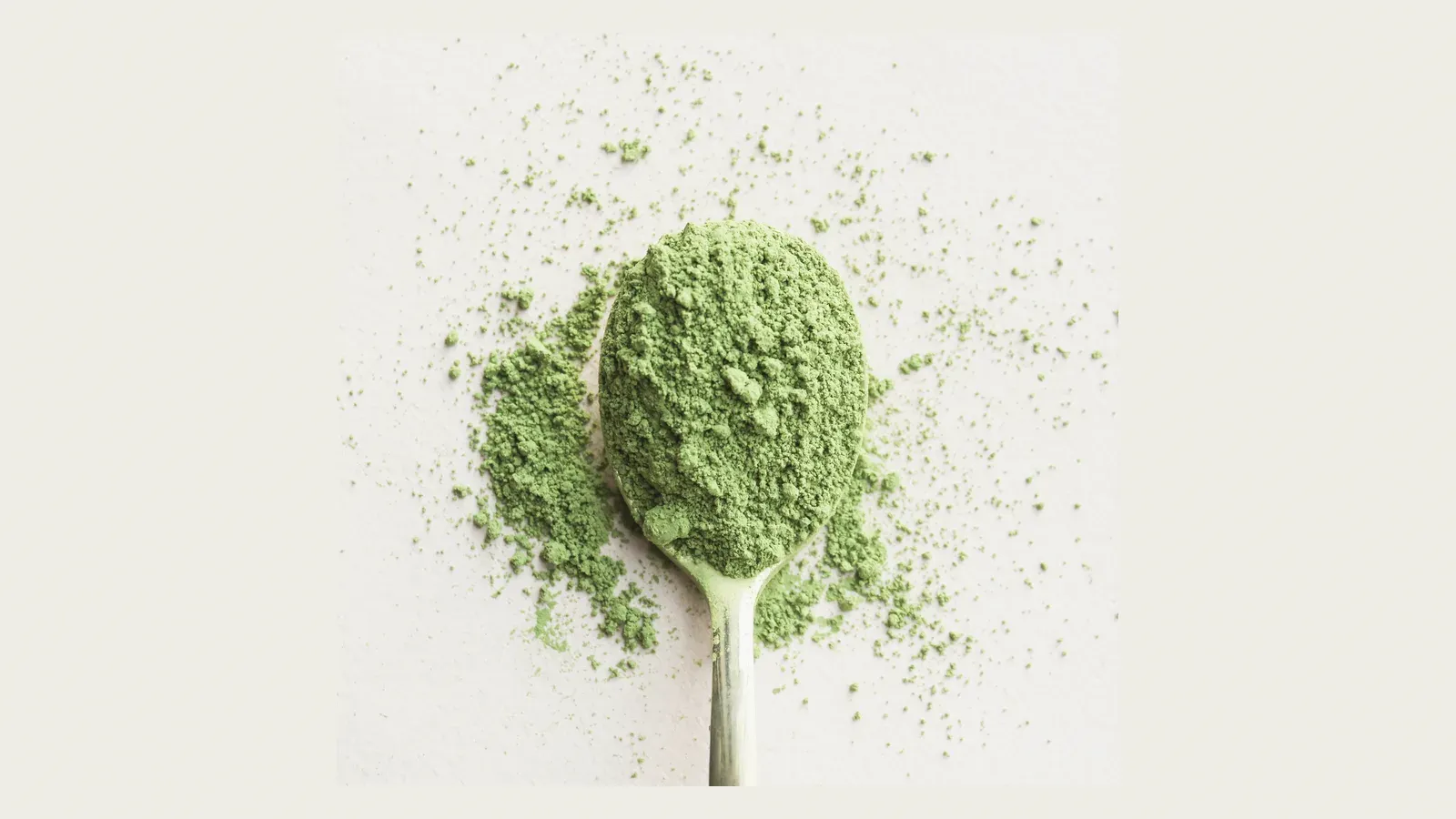
In the fiscal year that ended in March 2026, Japan imported 5,801 tonnes of green tea, up 82% on the year before 1. The same twelve months saw 13,125 tonnes go the other way, exports up 42% and worth ¥84.7 billion, with powdered tea making up around 70% of the volume leaving the country 1. Japan is now buying green tea in bulk and selling powder at a premium, in the middle of a tencha squeeze that has pushed auction prices to records.
None of that is fraud on its own. Japan has imported cheap bulk leaf for bottled drinks and food manufacture for decades, and imported powder has ordinary uses in ice cream, confectionery, and canned lattes. But the industry itself is now treating mislabelling as a live problem. The Japan Tea Association has applied for Geographical Indication registration for Japanese tea, a move its own framing describes as safeguarding authentic domestically grown and processed tea from counterfeit products in overseas markets 2.
Which leaves a practical question. If you have a tin in front of you, what can you establish about it?
The word that means nothing, and the word that means something
“Ceremonial grade” has no regulator. No Japanese body defines it, no standard sets a threshold for it, and no grading system exists that it maps onto 3. A seller can print it on any powder at any price. The phrase is a marketing register, not a specification.
Tencha (碾茶) is different. It is the raw material — shaded leaf, steamed, dried flat, never rolled — and it carries a working definition at wholesale, which is why it is the thing auctioned and reported rather than “ceremonial matcha” 4. If a merchant will tell you which tencha they ground and when, you have something to check. If they will only tell you the grade, you have an adjective.
We have written elsewhere about ceremonial versus culinary matcha, which answers a narrower question: given Japanese matcha, which tier is this? This piece is about the prior question of whether the powder is matcha at all.
What has to happen before powder counts as matcha
Four steps, each expensive, each leaving a trace 5.
| Step | What it does | Why it costs |
|---|---|---|
| Shade, ~4 weeks | Starves the leaf of light, raising amino acids and dropping astringency | Covers, labour, and a yield penalty on the field |
| Steam fixing | Halts oxidation in seconds, locking green colour and vegetal aroma | Equipment and precise timing |
| No rolling, then de-veining | Leaf dries flat; stems and veins are separated out | Discards a large fraction of the harvested weight |
| Stone milling | Grinds de-veined leaf to a talc-fine powder without heating it | ~40 g per hour, per mill |
That last figure is the one that governs the price. A traditional ishi-usu turns at a deliberate crawl, because friction heat scorches the leaf and flattens the aroma. The accepted output is about 40 grams an hour 6. Run one mill continuously for a full day and you have under a kilogram. Nakamura Tokichi, an Uji house grinding since 1854, makes the complementary point that the milling method matters less than the tencha going into it 7 — a stone mill fed poor leaf produces poor matcha slowly.
Skip any step and the economics change completely. Whole leaf ground in a ball mill or a blender comes out coarser and heat-damaged 6, and it comes out by the sackful.
The price floor, and where it stops working
Machine-picked tencha at the 2026 Kyoto first market averaged ¥13,972 per kilogram, roughly 1.7 times the previous record of ¥8,235 set a year earlier 9. Hand-picked tencha sits in a different bracket again, ¥45,000 to ¥60,000 10. Both figures are for unmilled leaf, before grinding, packing, shipping, or anyone’s margin, and at any exchange rate of the last decade even the machine-picked average is comfortably north of $80 a kilo.
Which is why the trade puts authentic ceremonial wholesale rarely below $80 to $100 per kilogram in 2026, and treats anything under $40 sold as “ceremonial” as a reason for scepticism 8.
Note also that the gap between those two Japanese tencha prices is three- to fourfold. The word “Japanese” on a tin settles the country and very little about the leaf, which is the same reason the grade word above it does no work. Our price reference separates the four different numbers that get quoted as one, and shows how far apart farm-gate, auction, and retail sit.
Price works as a filter at the bottom and fails in the middle. A £6 tin of ceremonial grade is telling you what it is. A reasonably priced one is not telling you much either way, because Japanese culinary powder and competently made non-Japanese powder overlap in cost, and both are legitimate products that become a problem only when the label claims otherwise.
Four checks, and what each one misses
The tests circulating online are usually presented as verdicts. They are closer to filters, and each one catches a different failure.
Dry colour. Fresh, well-shaded matcha is a deep green with a faint yellow cast, and it varies slightly between batches. Dull khaki points to age or late-harvest leaf. A flat, uniform, electric green is the signature of tartrazine or added chlorophyll 8. Misses: good non-Japanese powder, which sits comfortably in the correct colour range.
Texture between two fingers. Proper matcha feels like talc and leaves a stain on the skin. Grit means the mill was wrong, or the leaf still had stems and veins in it 6. Misses: a fine industrial mill defeats this test, and so does a bulking agent — starch and rice flour are both soft 8.
Foam in the bowl. Whisked usucha should build a dense, fine-bubbled crema that holds for a minute or more; powder that collapses within seconds, or never lifts at all, is usually cut with something or badly milled 8. Misses: this is the least reliable of the four in an untrained hand. Water above roughly 80 °C, a cold bowl, an unsoaked chasen, or too little powder will all sink the foam on genuine matcha.
Taste. The target is umami forward with a clean, mild bitterness behind it. Distinct sweetness suggests sugar or flour 8, and hollow grassiness with no body suggests ground sencha. Misses: nothing much, which is why it is the most informative test. It also requires a reference point you can only build by drinking known-good tea.
If you want a single decisive check, make koicha. Thick tea uses roughly twice the powder in a third of the water and is kneaded rather than whisked. Bad matcha cannot hide there — it turns bitter, grainy, or refuses to come together at all, and no technique rescues it.
Read the label for what it declares, not what it claims
Grade words are unregulated, so ignore them and look for facts a seller could be held to:
- A named prefecture, and ideally a named farm or district — not “Product of Japan” alone
- A cultivar, or at minimum a stated single-origin
- Harvest year and flush, first harvest being the one that yields top-grade tencha
- Milling method stated explicitly, since stone milling is a cost nobody hides
- A packing or best-before date, because matcha degrades fast once ground
Then hold one caveat. “Uji” is a defined term, but not the one most buyers assume. Since 2004 the Kyoto Prefectural Tea Industry Chamber has counted as Uji tea any leaf grown in Kyoto, Nara, Shiga, or Mie and then finished and processed inside Kyoto by a Kyoto business 11. That guarantees a finishing tradition, not a field beside the Uji River. Our guide to the tea regions sets out how often a regional name marks the finishing house rather than the farm.
The likelier problem
Here is the judgment, and it cuts against the framing of most articles on this subject. For a buyer in Europe or North America paying a normal premium price, the likeliest thing wrong with a tin is not that the leaf came from outside Japan. It is that the powder is Japanese, honestly so, and six months past its milling date, or that it is competent second-flush culinary leaf wearing a ceremonial label at a ceremonial price.
Outright substitution is a bottom-of-market phenomenon, and at that end price gives it away without any tests. Grade inflation and staleness operate everywhere, cost you more in aggregate, and pass every visual check going. Buying on disclosure rather than adjectives handles all three, and storing it properly handles the one that is your own responsibility.
The shortage will keep the pressure on for at least another two harvests. Sellers with nothing to hide have got noticeably more specific about origin over the last year. Treat vagueness as the signal it now is.
Sources
11sourcesKyodo News (via Nation Thailand), Ministry of Finance customs statistics
SupportsFY2025: Japan imported 5,801 t of green tea, up 82% year on year; exported 13,125 t, up 42%, value more than doubling to ¥84.7 bn; powdered green tea including matcha about 70% of export volume
Global Japanese Tea Association, Japanese Tea Report June 2026
SupportsThe Japan Tea Association has applied for Geographical Indication registration for Japanese tea, aimed at safeguarding authentic domestically grown and processed tea from counterfeit products in overseas markets
Naoki Matcha
SupportsNo organization regulates 'ceremonial grade'; no standardized matcha grading system in Japan
Tezumi
Supports'Ceremonial grade' undefined and unregulated in Japan and abroad; only tencha, the raw leaf, carries a regulated definition at wholesale
Global Japanese Tea Association
SupportsTencha grown in shade about four weeks, steamed and dried, rolling step skipped, leaves separated from stems and veins; matcha stone-ground
Mizuba Tea Co.
SupportsIshi-usu stone mill grinds about 40 g/hour; slow rotation avoids heat; stems and veins cause uneven powder; steel-ball and blender milling coarser and degraded
Nakamura Tokichi (Uji, since 1854)
SupportsStone milling yields about 40 g/hour; what matters most is the quality of the tencha, not the milling method
One with Tea
SupportsNamed substitutes: cheaper green tea powder, starch or rice flour, synthetic dyes including tartrazine and chlorophyll. Authentic ceremonial wholesale rarely below $80–100/kg in 2026; below $40/kg for 'ceremonial' warrants scepticism. Foam holding a minute or more vs collapsing in seconds; talc-like vs gritty texture; umami-forward vs distinctly sweet
Global Japanese Tea Association, Japanese Tea Report May 2026
Supports2026 Kyoto first tencha market at the JA Zen-Noh Uji Tea Distribution Center, Jōyō: machine-picked tencha average ¥13,972/kg, about 1.7× the previous record of ¥8,235; 375 lots, roughly 25 t submitted
Ooika, Five Matcha Shortage Facts
SupportsKyoto first-auction tencha series ~¥3,800/kg (2022), ~¥4,800 (2023), ~¥6,000 (2024), ¥8,235 (2025 record); hand-picked tencha ¥45,000–60,000/kg
Kyoto Prefectural Tea Industry Chamber (ujicha.or.jp)
SupportsOfficial 'Uji tea' definition (2004): leaf grown in Kyoto, Nara, Shiga, or Mie and finished and processed within Kyoto Prefecture by a Kyoto business
Image: Evanhoever, Wikimedia Commons · CC BY-SA 4.0
Common questions
Does 'ceremonial grade' guarantee the matcha is Japanese?
No. The phrase has no regulator and no standard behind it in Japan or anywhere else, so it says nothing about origin, harvest, or milling. Tencha, the unrolled shaded leaf that matcha is ground from, is the term that carries a definition at wholesale.
Can I tell fake matcha by colour alone?
Only the crude cases. Dull khaki usually means old or late-harvest leaf, and a flat neon green suggests dye. A well-made non-Japanese powder can sit in the same colour range as a mid-grade Japanese one, so colour narrows the field without settling it.
Why is real matcha so expensive?
A stone mill turns out roughly 40 g an hour, so one mill running around the clock yields under a kilogram a day. Add four weeks of shading, hand or selective picking, steaming, and de-veining, and the floor is set by process rather than by branding.
Is imported Chinese green tea powder being sold as Japanese matcha?
Japan's green tea imports rose 82% in FY2025, and the Japan Tea Association has applied for Geographical Indication registration explicitly to counter counterfeit Japanese tea sold overseas. Imported bulk powder has legitimate uses in food and bottled drinks; the risk sits at the labelling layer, largely outside Japan.